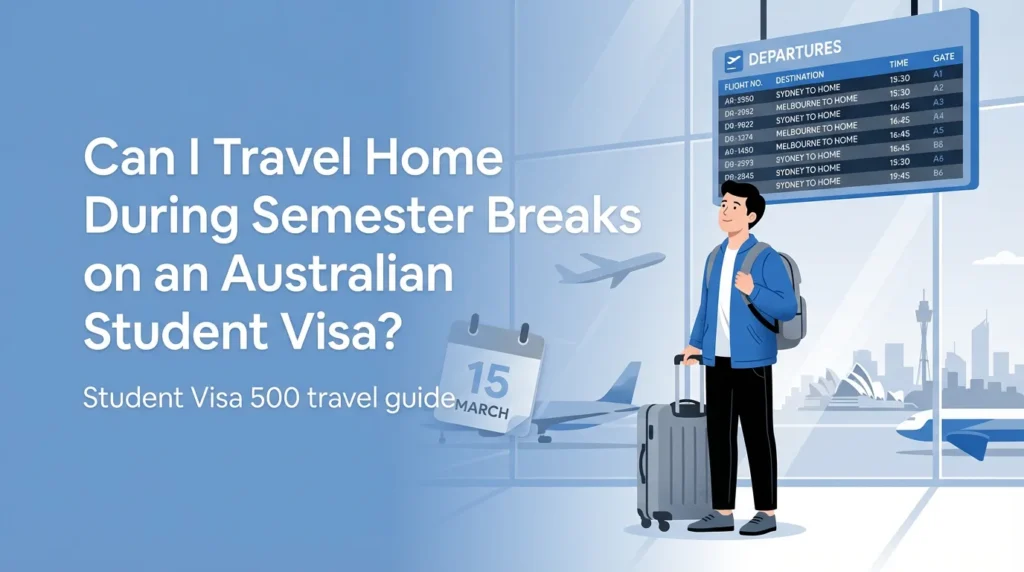
If you are studying in Australia, it’s natural to miss home and want to book flights as soon as semester break appears on the calendar. Many international students ask, “Can I travel home during semester breaks without risking my visa?”
As of 2026, most students on a Student Visa (subclass 500) can travel home during official semester breaks, as long as they keep their visa, Confirmation of Enrolment (CoE), Overseas Student Health Cover (OSHC) and passport valid, and return in time to resume studies.
This guide explains:
- When you can usually travel home safely in holidays
- Why term‑time travel is different and far riskier
- The key checks you should complete before booking flights
- When it’s wise to speak to a registered migration agent in Sydney or Melbourne before you leave Australia
Can international students travel home during semester breaks?
The Student Visa (subclass 500) is usually a multiple‑entry visa. This means you can leave and re‑enter Australia as long as:
- Your visa remains valid on the day you come back
- You continue to meet your visa conditions, including enrolment and attendance
- You hold approved welfare arrangements if you are under 18
As of 2026, the Department of Home Affairs emphasises that student visa holders must:
- Stay enrolled in a registered course
- Maintain satisfactory course progress and attendance
- Hold adequate health insurance (OSHC)
If these conditions are met and your travel falls inside an official semester break, travelling home is usually acceptable. However, if your situation is complex, for example, your CoE has been suspended, your visa is close to expiring, or you are on a bridging visa, you should speak to a registered migration agent before you travel.
Key requirements before you travel home
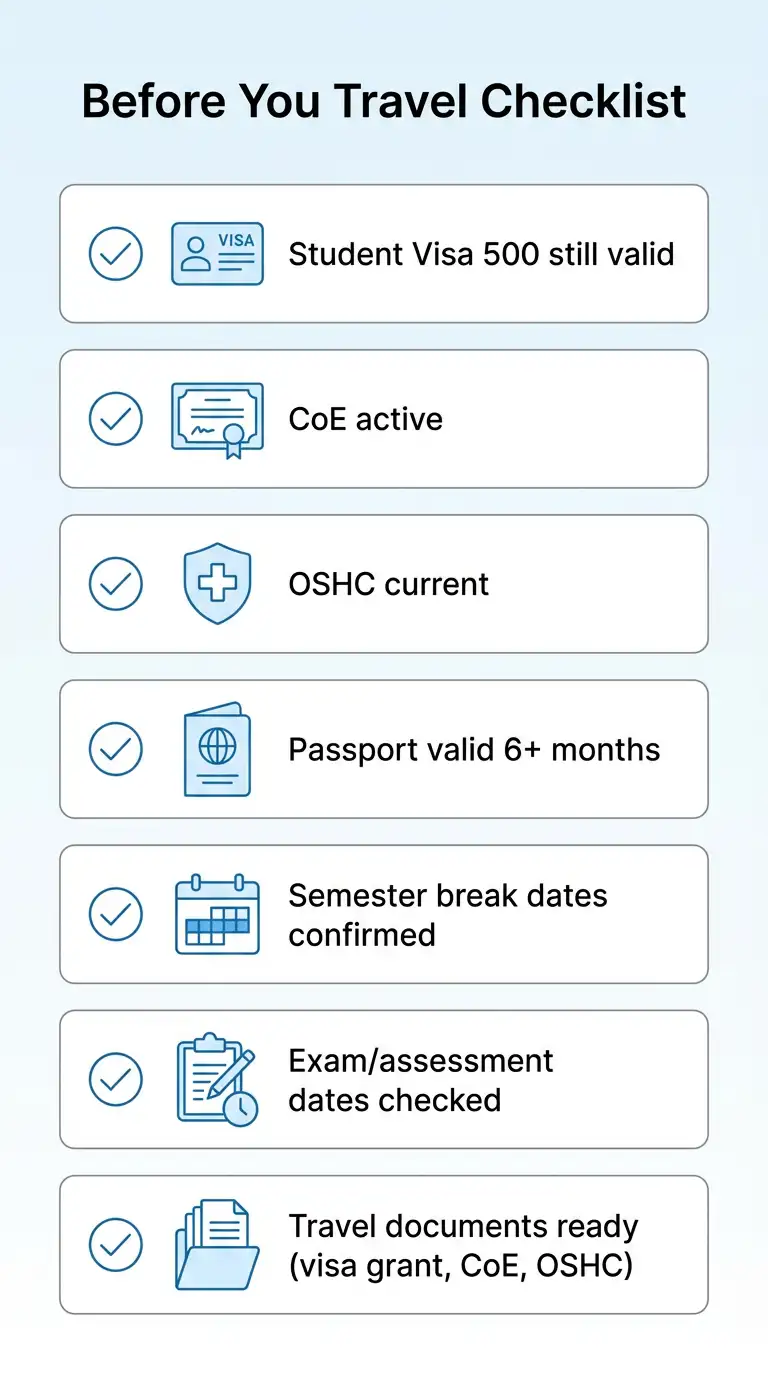
Before you book flights, work through the checklist below. It is designed to help you avoid common issues at the border or with your university.
1. Check your Student Visa 500 validity
- Log into VEVO or your visa grant letter to confirm the visa expiry date.
- Make sure you will re‑enter Australia before your visa expires.
- If your visa will expire soon after you plan to return, this is a high‑risk situation – get advice before booking.
If your visa expires while you are overseas, you may not be able to return on the same visa and you might have to apply for a new visa from outside Australia.
2. Check your passport expiry
- Ensure your passport is valid for at least 6 months beyond your planned return.
- Some airlines may refuse boarding if your passport is close to expiry.
- Renew your passport before travel if needed and update your details with the Department of Home Affairs.
3. Keep your Confirmation of Enrolment (CoE) active
Your CoE shows that you are enrolled in a registered course. If your CoE is cancelled or suspended while you are overseas, this can:
- Affect your right to re‑enter Australia on a Student Visa 500
- Lead to visa cancellation if enrolment is not maintained
Before travelling:
- Log in to your university or college portal to confirm your CoE status
- Clear any outstanding fees and academic issues that could lead to suspension
- If you are on conditional enrolment (e.g. because of failed subjects), speak with your faculty before you leave
4. Maintain Overseas Student Health Cover (OSHC)
- Check that your OSHC policy runs for your entire visa period.
- If you extend your course or visa, ensure OSHC is also extended.
- Keep a digital copy of your OSHC card or certificate when you travel.
If OSHC is not current, you may be in breach of visa conditions, and this can affect future visa applications.
5. Inform your university about travel plans
While you may not always be legally required to notify your university about holiday travel, it is good practice to:
- Confirm the exact semester break dates and exam timetable
- Let your faculty or course coordinator know you will be overseas during the break
- Check whether there are any intensive classes, placements or assessments scheduled during that time
For travel during teaching weeks or assessments, many providers require formal approval or a Leave of Absence.
6. Travel documents to carry when re‑entering Australia
When you return to Australia, make sure you carry:
- A valid passport
- Your Student Visa 500 details (printed grant letter or VEVO screenshot)
- Evidence of your CoE or enrolment confirmation
- OSHC details
- Any supporting letters from your university if you have term‑time leave or special circumstances
Having these documents ready can help smooth questions at check‑in and at the Australian border.
Can international students travel home during term time?
Travelling during teaching weeks or exam periods is very different from travelling in semester breaks. In most cases, you should avoid travelling during term time unless there is a genuine, compassionate or compelling reason.
Leaving without permission can cause:
- Attendance breaches and academic failure
- CoE suspension or cancellation by your provider
- Visa issues, including the risk of visa cancellation if you no longer meet course requirements
If you need to travel during term time, treat it as a formal process rather than a simple holiday.
Expert Australian Migration Guidance
Navigating the complexities of your visa journey is easier with professionals. Start your Australian dream today.
Book ConsultationWhen term‑time travel might be approved
Universities and colleges in Australia may consider term‑time leave when you have:
- A serious medical condition requiring treatment or recovery overseas
- The death or serious illness of a close family member
- Other compassionate or compelling circumstances, such as a major family crisis
In these cases, you will usually need to
- Apply for Leave of Absence/intermission through your provider
- Provide evidence (medical certificates, death certificates, official letters)
- Confirm how your course progression and assessments will be managed
What happens if you travel without permission?
If you leave during term without approval:
- Your provider may record low or zero attendance while you are away
- You may miss key assessments, exams or placements
- Your provider may report you to the Department of Home Affairs for unsatisfactory progress or attendance
- Your CoE can be cancelled, which may lead to visa issues
These situations can be complicated, especially if you already have academic warnings. Before you travel, seek advice from your international student support team and consider speaking to a migration agent.
Practical travel checklist for international students
Use this quick checklist before you confirm flights:
- My Student Visa 500 will still be valid when I return to Australia
- My CoE is active and my course will continue after the break
- My OSHC covers my whole stay in Australia
- My passport is valid for at least 6 more months
- I have checked my exam and assessment dates
- I have confirmed official semester break dates with my provider
- I will carry my visa grant letter, CoE and OSHC details when travelling
When you should speak to a migration agent
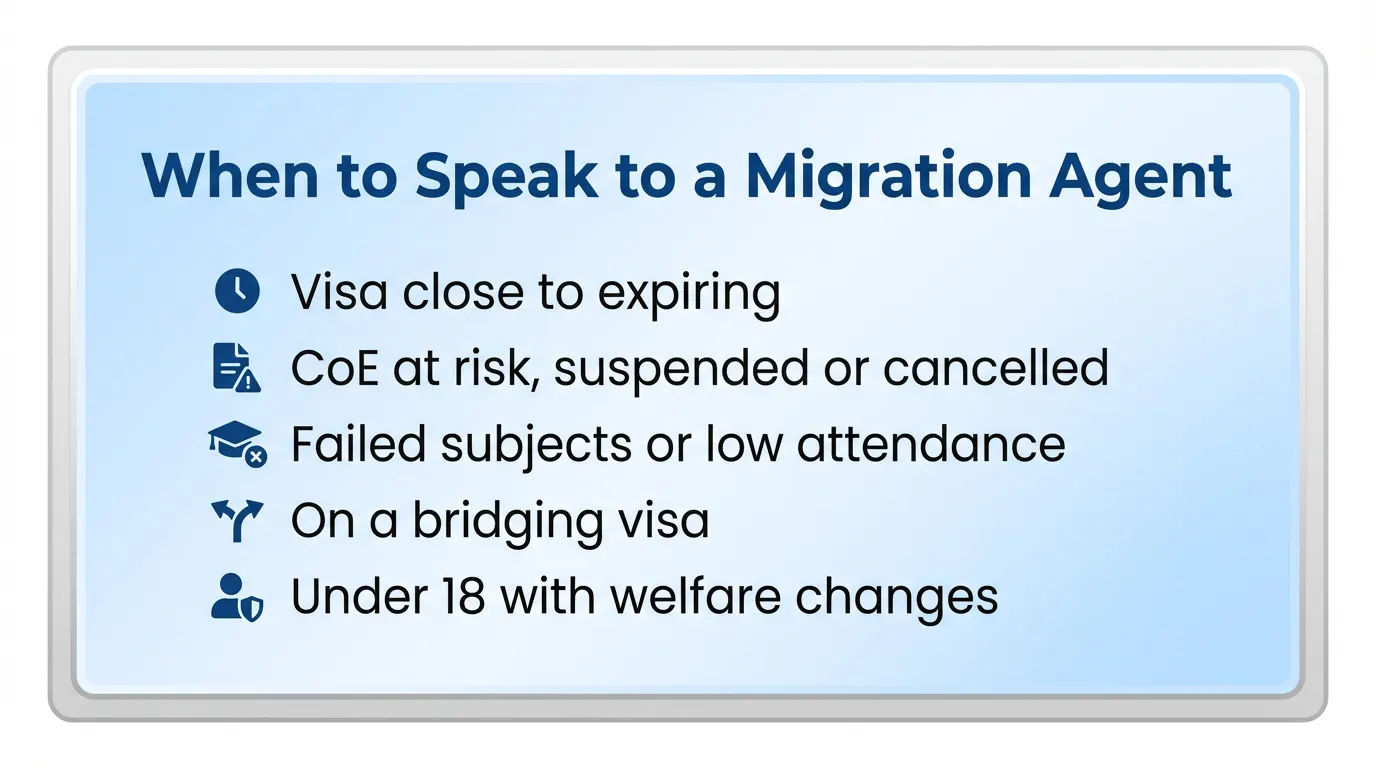
It is especially important to speak to a registered migration agent before travelling if:
- Your visa is close to expiring, and you want to travel home
- Your CoE is at risk of suspension, has already been suspended or cancelled
- You have failed subjects, low attendance or a history of academic issues
- You are on a bridging visa while waiting for a new student visa or another visa outcome
- You are under 18, and your welfare arrangements are changing
If your case is not straightforward, getting advice on travelling home during semester break can save you from serious problems at the border or when you try to return.
Our team at The Migration supports international students across Australia, including those studying in Sydney and Melbourne. We can review your situation, explain your options and help you plan travel that is as low‑risk as possible.
You can book a consultation with a registered migration agent to discuss your plans in Sysney and Melbourne.
Conclusion
For most international students, travelling home during official semester breaks on a Student Visa 500 is possible and often a much‑needed chance to recharge and see family.
The key is to:
- Make sure your visa, CoE, OSHC and passport will all be valid when you return
- Avoid term‑time travel unless there are compassionate or compelling reasons and you have formal approval
- Get personalised advice if your situation involves visa expiry, CoE changes, academic issues or bridging visas
When in doubt, it is safer to speak to a professional rather than risking your ability to come back and finish your studies in Australia.
If you are unsure about your plans, our Migration agents can help you understand the rules, your risks and your options before you book flights. Book your consultation with our MARA agents to start your journey in Australia.