
Certificate III in Air-conditioning And Refrigeration
Certificate III in Air-conditioning and Refrigeration (UEE32225) – Your pathway to a rewarding career and permanent residency
- Fast Track: Complete in just 12 months
- Traditional Track: Comprehensive 24-month program
- Earn $84,000 - $117,000+ as a qualified technician
- Climate-driven demand with 50% training attrition creates an opportunity
* PR outcomes depend on individual eligibility and current migration policy
12 Months
Fast Track
24 Months
Long Track
$117K
Senior Technician Salary
MLTSSL
Listed Occupation
Critical
Climate-Driven Shortage
What is Certificate III in Air conditioning and Refrigeration?
Certificate III in Air-conditioning and Refrigeration (UEE32225) is Australia’s nationally recognized trade qualification for HVAC&R technicians. This comprehensive course trains you to install, commission, service, and repair air conditioning systems, refrigeration equipment, and climate control systems in residential, commercial, and industrial settings.
As a qualified HVAC&R technician, you’ll work across diverse applications including split systems, ducted air conditioning, commercial refrigeration, VRV/VRF systems, chillers, and cold rooms. The qualification includes a mandatory ARCtick refrigerant handling licence. Australia’s climate change, urbanization, and net-zero transition drive unprecedented demand with $12.7 billion spent on HVAC equipment in 2022 doubled from 2012.
Key Course Details:
- Qualification: Certificate III in Air-conditioning and Refrigeration (UEE32225)
- ANZSCO Code: 342111 (Air-conditioning and Refrigeration Mechanic)
- Fast Track: 12 months (accelerated delivery)
- Long Track: 24 months (comprehensive program)
- Delivery: Practical workshop training + classroom learning
- Nationally Recognized: Across All Australian States
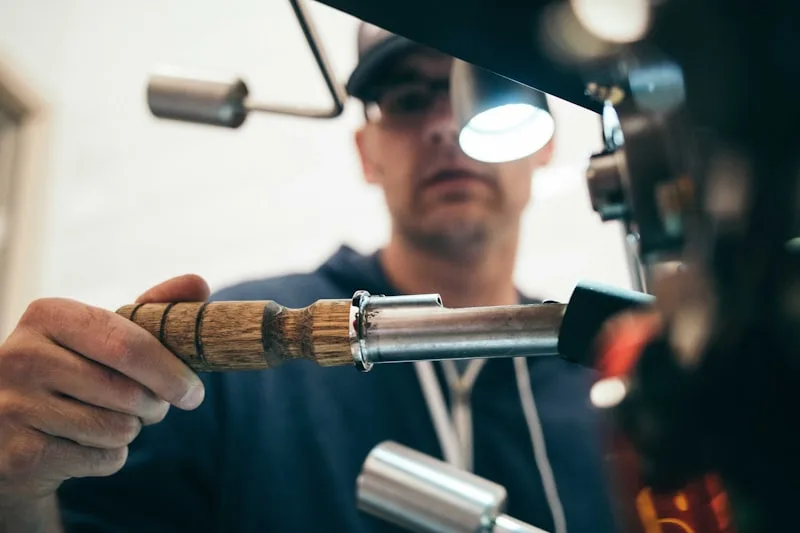
Choose Your Certificate III in Air conditioning and Refrigeration Course Track
We offer two flexible pathways to suit your timeline, budget, and career goals:
Fast Track Course
Complete in 12 Months
12
Months Duration
Ideal For:
- Students wanting faster qualification
- Those with some HVAC or electrical background
- Career changers seeking quick entry
- Students with limited visa time
Course Features:
- Intensive practical training schedule
- Accelerated theory modules (thermodynamics, refrigeration cycle, electrical systems)
- Same nationally recognized qualification
- ARCtick licence included
- Full PR pathway eligibility
Long Track Course
Complete in 24 Months
24
Months Duration
Ideal For:
- Students preferring comprehensive training pace
- Those wanting extended visa stay in Australia
- Students balancing work and study
- Complete beginners to HVAC&R systems
Course Features:
- Extended time for complex systems mastery
- More specialization training (commercial refrigeration, chillers, VRV)
- Same nationally recognized qualification
- ARCtick licence included
- Full PR pathway eligibility
Is Your Current Pathway Leading to PR?
Many international students struggle with expensive courses that don’t guarantee employment or permanent residency. An HVAC&R qualification solves these common challenges:
Struggling to Find Sponsored Work?
HVAC&R technicians are in critical shortage with 50% attrition rate during training and aging workforce. Climate change drives permanent demand increases. Employers actively sponsor qualified technicians for 482 and 186 visas.
University Degree Not Working?
HVAC&R qualifications offer superior employment outcomes and higher salaries. Qualified technicians earn $84,000-$95,000 average, with senior technicians reaching $117,000. Median weekly earnings of $2,019 significantly exceed national median of $1,396.
Running Out of Visa Time?
An HVAC&R course extends your stay through 12-24 month study period, followed by 485 Graduate visa. Earn $32,000-$40,000 during training while building skills that qualify for multiple PR pathways including 189 and 190 visas.
Why Choose an HVAC&R Course in Australia?
Air-conditioning and refrigeration offers unmatched advantages for international students seeking permanent residency:
Climate-Driven Permanent
Climate change permanently increases cooling demand. $12.7 billion spent on HVAC equipment in 2022 (doubled from 2012). Rising temperatures, urbanization, and population growth create structural long-term demand.
MLTSSL Listed Occupation
Air-conditioning and Refrigeration Mechanic (342111) is on the Medium and Long-term Strategic Skills List, giving you access to 189, 190, 491, 482, and 186 visa pathways.
Dual Licensing Advantage
HVAC&R requires both state trade licence AND ARCtick national refrigerant handling licence. This dual-licensing creates substantial barriers to entry protecting qualified technicians' earning power.
Regional & Remote Premiums
Queensland, Western Australia, and Northern Territory show acute demand due to climate. Regional HVAC&R technicians eligible for 491 visas with 15 additional points.
Employer Sponsorship
Critical shortage and technical complexity mean employers actively sponsor HVAC&R technicians on 482 TSS and 186 ENS visas.
Skills Assessment Ready
Certificate III + work experience qualifies you for TRA skills assessment. Technical complexity of qualification demonstrates high skill level for migration purposes.
Year-Round Work
HVAC&R work continues year-round: summer for air conditioning demand, winter for refrigeration/heating maintenance, shoulder seasons for installations and commercial work.
Technical Complexity Protection
HVAC&R involves thermodynamics, electrical systems, refrigeration cycle, and environmental compliance. High technical complexity creates strong job security and reduces competition.

What You'll Learn in Certificate III in Air-conditioning and Refrigeration
This comprehensive course covers all aspects of HVAC&R systems installation, service, and repair:
Refrigeration Principles & Systems
Understand thermodynamics, refrigeration cycle, pressure-enthalpy diagrams, and refrigerant properties. Install and service split systems, ducted systems, and commercial refrigeration equipment
Installation & Commissioning
Install wall-mounted splits, ducted systems, VRV/VRF, cold rooms, and chillers. Perform vacuum testing, refrigerant charging, airflow balancing, and performance verification
Electrical Systems & Controls
Wire and commission HVAC&R electrical circuits, control systems, thermostats, defrost controls, and Building Management Systems (BMS) integration
Service, Fault Diagnosis & Compliance
Diagnose electrical, mechanical, and refrigeration faults. Perform leak detection, compressor testing, and system optimization. Ensure compliance with ARCtick regulations and environmental legislation
Entry Requirements for Certificate III in Air Conditioning and Refrigeration Course
Requirements for onshore international students seeking to enrol in Certificate III in Air-conditioning and Refrigeration.
Academic Requirements
- Year 10-12 or equivalent completed
- Strong mathematical and technical aptitude
- Understanding of basic physics and electrical principles
- No prior HVAC&R experience required
English Requirements
- IELTS 6.0 overall (minimum 5.5 in each band)
- PTE Academic 50+ overall
- Cambridge English FCE
- TOEFL iBT 60+ overall
Visa & Other Requirements
- Valid Australian visa with work rights
- Physical fitness for heights, confined spaces, heavy lifting (15-30kg outdoor units)
- White Card (Construction Induction) - beneficial
- Driver's licence - highly beneficial for service work
Certificate III in Air Conditioning and Refrigeration PR Pathway Options
Multiple visa pathways available for qualified air-conditioning and refrigeration mechanics in Australia
- Most Popular
Subclass 189
Skilled Independent Visa
- No sponsorship required
- Points-based selection (65+ points minimum, competitive at 85+)
- Direct permanent residency
- Live and work anywhere in Australia
- Most Popular
Subclass 190
State Nominated Visa
- State/territory nomination required
- 60+ points (plus 5 nomination bonus)
- Direct permanent residency
- 2-year commitment to nominating state
- Most Popular
Subclass 491
Skilled Work Regional
- Regional sponsorship
- 50+ points (plus 15 bonus)
- 5-year provisional visa
- Pathway to 191 PR after 3 years
- High demand in regional mining and agricultural areas
Subclass 482
Employer Sponsored TSS
- Employer sponsorship required
- No points test
- 2-4 year visa
- Pathway to Subclass 186 PR visa after 2-3 years
Subclass 186
Employer Nomination Scheme
- Direct employer nomination
- Direct permanent residency
- No points test required
- 3+ years experience or transition from 482
Subclass 485
Temporary Graduate Visa
- For recent graduates
- 18 months for trade qualifications
- Full work rights
- Gain Australian work experience for TRA assessment
How The Migration Helps You Succeed
Our comprehensive support from apprenticeship search to PR application
1
Free Assessment
We evaluate your background, technical aptitude, and visa status to recommend the best HVAC&R pathway (Fast Track vs Long Track)
2
Course Enrolment
We connect you with CRICOS-registered RTOs offering HVAC&R courses including ISMT, AIBT Global, Get Skilled Training, and assist with enrolment
3
Visa Support
Student visa, extensions, 485 Graduate visa, and employer sponsorship applications handled professionally throughout your journey
4
PR Application
Skills assessment (TRA) and skilled migration application support when you're ready, including ARCtick licence documentation and Job Ready Program
Student Success Stories
“I came from hospitality and wanted technical work. The 24-month HVAC&R course at AIBT gave me time to learn electrical and refrigeration theory properly. After getting my ARCtick licence and 485 visa, I found work servicing commercial refrigeration earning $88,000. I received my 190 visa through Queensland.”
Mohammed A.
Hospitality Worker → Commercial Refrigeration Technician
“The 12-month Fast Track worked perfectly. I had electrical background which helped. After qualification, I specialized in VRV systems for commercial buildings. I’m now earning $105,000 as a senior technician and have my PR through employer sponsorship from a major HVAC company.”
David C.
Electrician → VRV Specialist
“I moved to Cairns after qualifying—the tropical climate means constant AC demand. I’m earning $95,000 doing service work and my 491 regional visa gave me the points I needed. Best decision was choosing HVAC&R over other trades because climate change means this work will never disappear.”
Ana M.
HVAC&R Graduate → Regional Technician
HVAC&R Career Progression in Australia
From trainee to business owner — HVAC&R offers exceptional career growth:
1. Trainee HVAC&R Technician
$65,000 | During training period (above most trades)
2. Qualified HVAC&R Mechanic
$84,000 - $95,000 | Full trade certificate with ARCtick licence
3. Senior Technician / Specialist
$95,000 - $117,000 | VRV systems, chillers, commercial refrigeration, BMS specialist
4. Contractor / Business Owner
$120,000 - $180,000+ | Service rates $50-$60/hour + overtime/weekend premiums

Frequently Asked Questions
Common questions about Certificate III in Plumbing and PR pathways
What is Certificate III in Air-conditioning and Refrigeration (UEE32225)?
Certificate III in Air-conditioning and Refrigeration (UEE32225, superseding UEE32220 from March 2025) is Australia’s nationally recognized trade qualification for HVAC&R technicians. It trains you to install, commission, service, and repair air conditioning systems, refrigeration equipment, and climate control systems. The qualification includes mandatory ARCtick refrigerant handling licence. We offer 12-month Fast Track and 24-month Long Track programs.
What is the difference between the 12-month and 24-month HVAC&R course?
The 12-month Fast Track offers intensive delivery ideal for students with electrical or mechanical background. The 24-month Long Track provides more time for complex systems mastery (thermodynamics, electrical theory, refrigeration cycle), better for complete beginners. Both result in the same nationally recognized Certificate III qualification and ARCtick licence.
What is the ARCtick licence and why is it mandatory?
ARCtick is the Australian national refrigerant handling licence required by law to purchase, handle, or work with refrigerants. Penalties for unlicensed work reach $1,800 individual and $450,000 corporate. The ARCtick licence is included in Certificate III training and is separate from your state trade licence—you need BOTH to work legally.
Is air-conditioning and refrigeration mechanic on the skilled occupation list for Australian PR?
Yes, Air-conditioning and Refrigeration Mechanic – ANZSCO 342111 – is on the MLTSSL (Medium and Long-term Strategic Skills List), making it eligible for all skilled visa categories including 189, 190, 491, 482, and 186 visas.
How much do HVAC&R technicians earn in Australia?
Qualified HVAC&R technicians earn $84,000-$95,000/year average (median $2,019/week versus national median $1,396/week). Senior technicians with 8+ years reach $116,000-$117,000. Service technicians charge $50-$60/hour with substantial overtime and weekend premiums (1.5x-2x). Specialization premium rates: VRV systems, chiller technicians, controls/BMS specialists command top rates.
What makes HVAC&R different from electrical or plumbing?
HVAC&R is highly technical, combining electrical theory, thermodynamics, refrigeration principles, and mechanical systems. Unlike plumbing or basic electrical work, HVAC&R requires dual licensing (state trade licence + ARCtick national licence). Climate change creates permanent structural demand increases unlike cyclical construction trades. Work is 50/50 indoor/outdoor with year-round demand.
What specializations are available for HVAC&R technicians?
Key specializations include: VRV/VRF systems specialist (multi-split commercial systems), Commercial refrigeration (supermarkets, food service), Chiller technician (large-scale cooling plants), Controls/BMS specialist (building automation), Industrial refrigeration (cold storage, food processing), and Marine refrigeration (ships, offshore platforms). Each specialization commands premium rates.