
You’ve done the hard work, waited through processing times, and finally received the email: your Australian permanent residency is granted. Whether you’re settling in Sydney, Melbourne, or any other city, it’s completely normal to feel a mix of relief, excitement, and a little confusion about what happens next.
This guide walks you through what to do after getting permanent residency in Australia. We’ll cover your key rights and benefits, practical steps for the first 30–90 days, bigger life decisions around work, property, study, and family, and the pathway from permanent residency to Australian citizenship, all in one place.
What Does Australian Permanent Residency Actually Give You?
Australian permanent residency (PR) is different from a temporary visa. Instead of needing to renew your visa regularly or being tied to one employer, life after permanent residency in Australia gives you far more stability and choice.
As a permanent resident, you generally can:
- Living in Australia indefinitely, your permanent visa lets you stay here long term.
- Work in most jobs and change employers without needing a new visa (subject to licensing/registration in regulated professions).
- Enrol in Medicare, Australia’s public healthcare system, once you meet the eligibility requirements.
- Study in Australia, often with access to domestic-fee options in some courses and institutions.
- Sponsor eligible family members such as partners, some parents, and certain other relatives to join you on appropriate visas.
- Buy residential property, with access to schemes like the First Home Owner Grant, where you meet the criteria (note: this is not financial advice).
- Access some social security benefits after specific waiting periods.
- Use PR as a pathway to Australian citizenship, once you meet the residency and character requirements.
Throughout this process, a registered migration agent can help you understand how these rights apply to your specific situation.
First 30–90 Days After Getting PR Practical Next Steps
Think of the first few months as setting up the foundations of your new life. These are the next steps after getting PR in Australia that most people should consider.
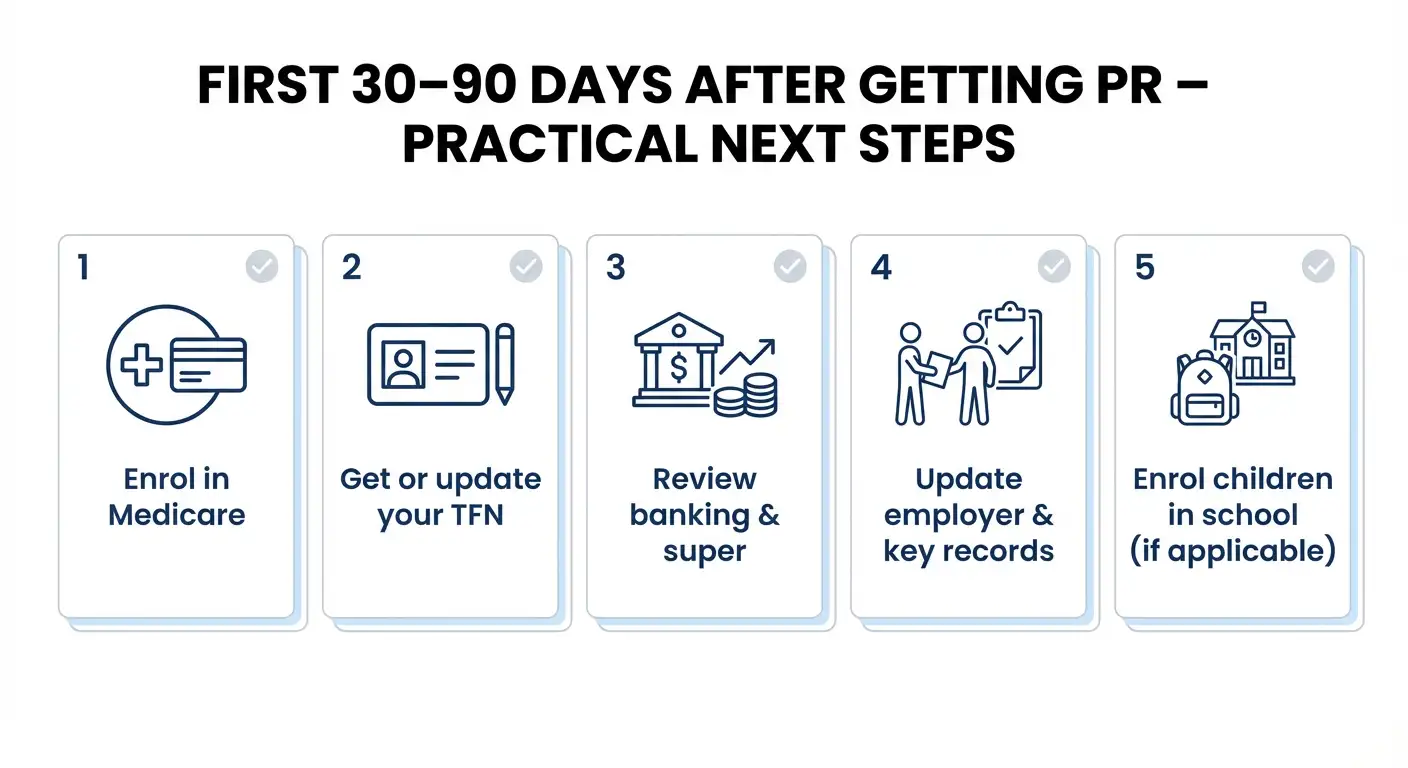
Enrol in Medicare and Review Your Health Cover
If you’re eligible, your first step should be to enrol in Medicare:
- Check the current enrolment requirements on the official Services Australia website.
- Visit a Medicare Service Centre (or follow the online process, where available) with your passport, visa grant notice, and required documents.
- Once approved, you’ll receive a Medicare number and physical card.
Even with Medicare, many people in Australia keep private health insurance for extras or faster access to certain services. Consider comparing options based on your family’s needs.
Apply for or Update Your Tax File Number (TFN)
Your Tax File Number (TFN) is essential for working and paying the correct amount of tax.
- If you don’t have a TFN yet, apply online through the Australian Taxation Office (ATO).
- If you already have a TFN from a previous temporary visa, you usually keep the same number. Simply ensure your details are up to date with the ATO.
Having a TFN avoids higher tax rates and simplifies interactions with employers and government agencies.
Open or Update Your Australian Bank Accounts and Superannuation
Permanent residency is a good time to review your banking and superannuation (retirement savings):
- If you’ve just arrived, open an Australian bank account for salary deposits and everyday expenses.
- If you already have accounts, review fees and features to ensure they still suit you.
- Check all your super funds. Many people have multiple accounts from different jobs; consolidating them (where appropriate) can reduce duplicate fees. Consider seeking independent financial advice if you’re unsure.
Update Your Employer and Important Records
Let key organisations know that your visa status has changed to PR:
- Employer: Provide updated visa documentation so HR/payroll records are accurate.
- Education provider: if you’re studying, your status may affect fees or eligibility for certain programs.
- Banks, insurers, and other institutions: update your details where needed.
Keeping records accurate helps avoid issues with payroll, enrolment, or future applications.
Enroll Children in School (If Applicable)
If you have school‑aged children:
- Contact local public schools in your area to understand enrolment processes and zoning.
- Clarify any documentation they require (proof of address, immunisation records, visa details).
As permanent residents, many families find it easier and more affordable to access public education options compared to some temporary visa arrangements.
Bigger Life Decisions After PR Property, Study, and Family
Once the basics are sorted, many new permanent residents start planning longer‑term decisions around housing, education, and bringing loved ones to Australia.
1. Buying a Home or Investing in Property
As a PR holder, you can usually buy residential property in Australia without needing Foreign Investment Review Board (FIRB) approval in the same way certain temporary visa holders do.
Key points to consider:
Expert Australian Migration Guidance
Navigating the complexities of your visa journey is easier with professionals. Start your Australian dream today.
Book Consultation- You may be eligible for the First Home Owner Grant (FHOG) or other state‑based schemes if you meet their criteria.
- Property prices and stamp duty rules vary between states and territories.
- It’s important to seek independent financial and legal advice before you commit.
If you’re unsure whether to buy now or later, a migration‑aware financial adviser can help you weigh up your options.
2. Upgrading Your Skills or Study Options
PR can open doors to further study:
- Some courses may treat you as a domestic student, with different fee structures compared to international students.
- You may have more flexibility to change courses or providers without affecting your visa.
If you’re considering university, TAFE, or professional qualifications in cities like Sydney or Melbourne, check the latest entry requirements, fees, and recognition of your overseas studies.
3. Sponsoring Your Family to Join You
One of the most meaningful parts of getting PR is the ability to sponsor eligible family members. Depending on your circumstances, you may be able to support applications for:
- A partner visa for a spouse or de facto partner.
- Certain parent visas if your parents meet the balance‑of‑family and other criteria.
- In limited cases, other relatives under specific visa subclasses.
Pathway From Permanent Residency to Australian Citizenship (As of 2026)
For many people, the natural pathway from permanent residency to Australian citizenship is the next big goal.
As of 2026, most applicants for citizenship by conferral need to:
- Have been lawfully present in Australia for at least four years immediately before applying.
- Have held a permanent visa for at least 12 months immediately before the application.
- Have spent no more than 12 months outside Australia in the last four years, and no more than 90 days outside Australia in the last 12 months before applying.
- Meet good character requirements and pass the citizenship test, where required.
Some people may qualify under special residence rules, but these are limited to specific circumstances.
Because rules and policies can change, always check the latest information on the official Department of Home Affairs website before you apply, or seek tailored advice from a registered migration agent.
Your Rights, Responsibilities, and When to Seek Help
Permanent residency brings significant benefits, but also responsibilities.
Key rights include:
- Living and working in Australia indefinitely.
- Access to Medicare (where eligible).
- Access to certain social security benefits after waiting periods.
- The ability to sponsor eligible family members and eventually apply for citizenship.
Key responsibilities include:
- Following Australian laws at all times.
- Paying tax on your Australian income and lodging accurate tax returns.
- Maintaining your residence in Australia during long periods overseas can affect both your permanent visa travel facility and future citizenship eligibility.
- Keeping your details up to date with relevant authorities where required.
Seek professional migration advice if:
- You have complex travel patterns or long absences from Australia.
- You’re not sure how time spent on different visas counts towards citizenship.
- You want to sponsor a family but are unsure which visa pathway is realistic.
Conclusion
Receiving Australian permanent residency is a major milestone. The next phase is about making the most of it, from getting Medicare and your TFN in place to planning for property, study, family sponsorship, and citizenship.
Whether you’re building a new life in Sydney, Melbourne, or any other part of Australia, the right steps now can make your transition smoother and your long‑term plans clearer.
If you’d like personalised guidance on your next steps after getting PR in Australia, including citizenship timing, family options, and visa strategy, consider booking a consultation with The Migration so a registered migration agent can review your situation in detail.