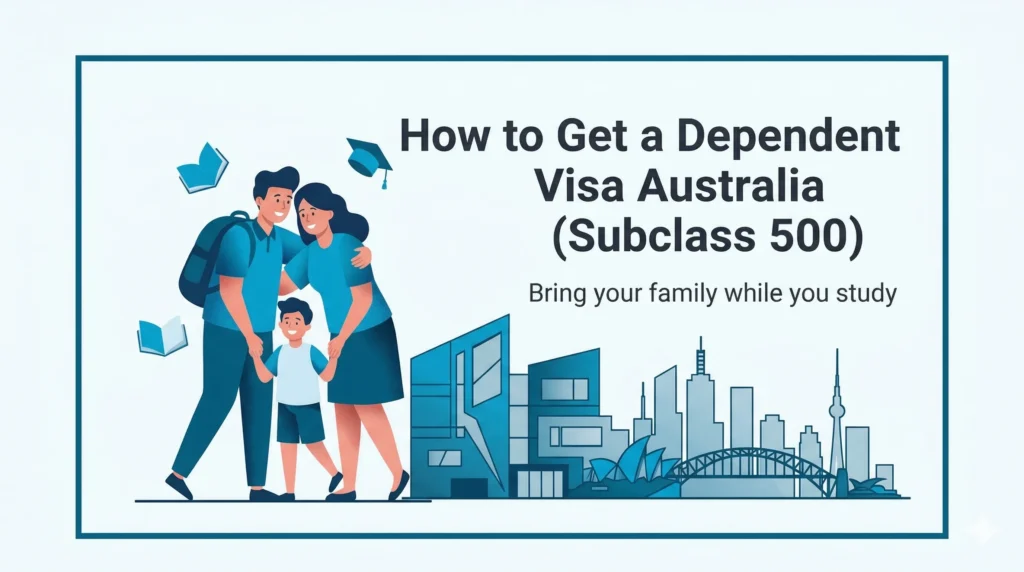
Being apart from your partner or children while you study can be one of the hardest parts of moving to Australia. The dependent visa pathway linked to the Student Visa (Subclass 500) allows eligible family members to join you so you can live, study, and build a life together.
Our migration expert will explain who can apply as a dependent, the key eligibility and financial requirements, the documents you need, how the application process works (including subsequent entrants), and what to expect with processing times, visa costs and work rights all as of 2026.
Throughout, we’ll flag where you should check the latest information on the Department of Home Affairs website and when it may be wise to speak with a registered migration agent in Sydney or Melbourne for personalised advice.
What Is a Dependent Visa for Student Visa Subclass 500?
The dependent visa for Student Visa (Subclass 500) allows certain family members of an international student to:
- Join the primary student visa holder in Australia, or
- Remain in Australia while the primary student continues their studies.
Eligible dependants are granted a visa that is linked to the main Student Visa (Subclass 500). Their visa period is generally aligned with the primary student’s course length, subject to visa conditions and any subsequent changes.
Common scenarios include:
- A married or de facto partner joining a student already in Australia.
- Children joining one or both parents who hold a 500 visa.
- A student, including their family from the outset of the application.
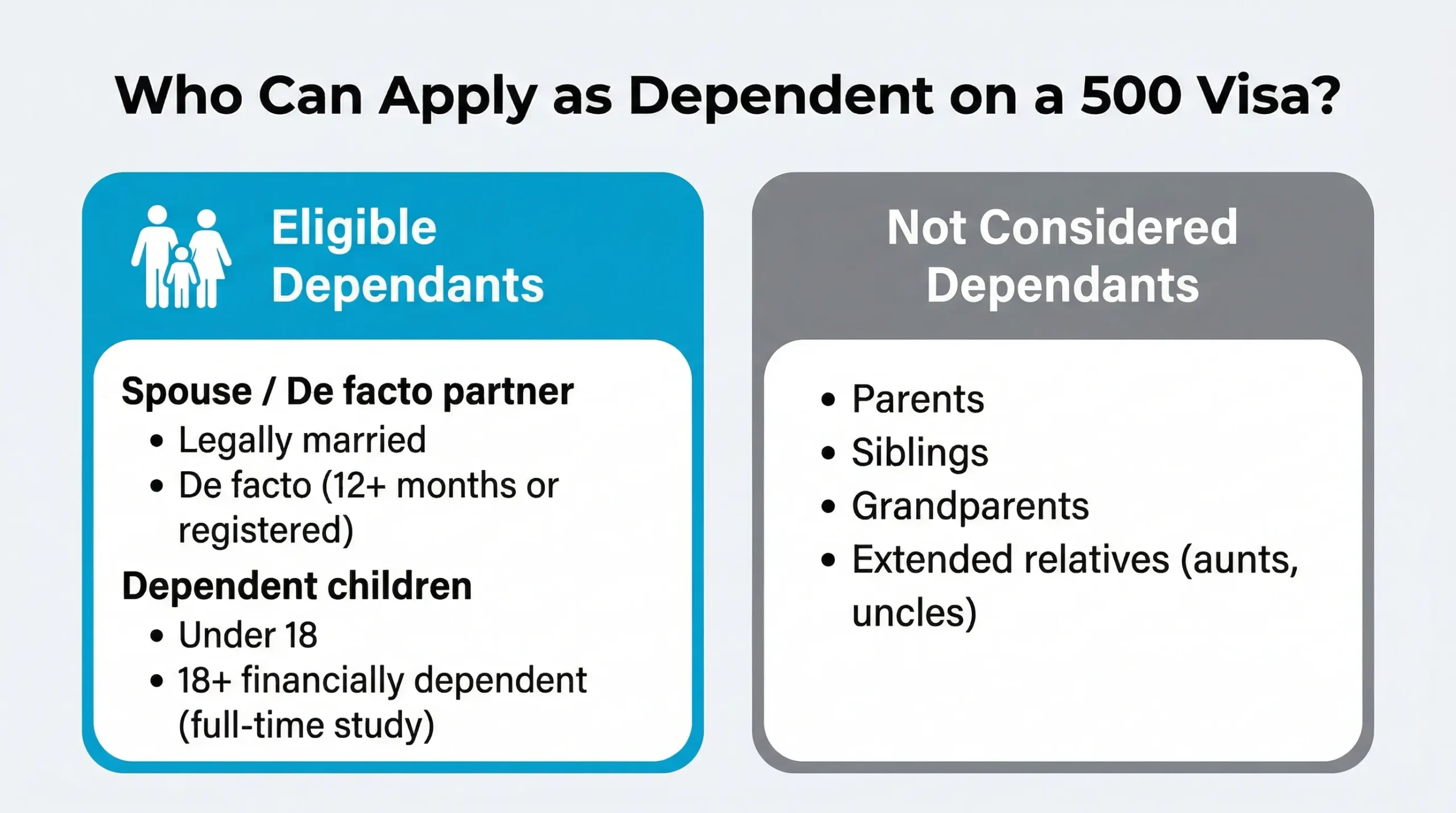
Who Can Apply as a Dependent on a 500 Visa?
Not every relative can be added as a dependent. Home Affairs is strict about who counts as a “member of the family unit” for a Student Visa (Subclass 500).
Eligible partners (spouse / de facto)
A partner may qualify if they are:
- Your spouse, or
- Your de facto partner (usually requiring evidence you have lived together in a genuine relationship for at least 12 months, or registration of the relationship where available).
You must show that the relationship is genuine and continuing, typically through documents such as joint leases, shared bills, photos, communication records and statements.
Eligible dependent children
Children are generally considered dependants if they are:
- Your or your partner’s child, and
- Under 18, or over 18 but still financially dependent and meeting study requirements (subject to Home Affairs rules).
Additional evidence may be required where children are over a certain age or from previous relationships.
Who is not considered a dependent?
The following family members usually cannot be included as dependants on a 500 visa:
- Parents of the student
- Siblings (brothers or sisters)
- Other extended relatives such as cousins, aunts or uncles
These relatives may need to explore other visa options.
Key Eligibility Requirements (As of 2026)
Visa laws can and do change. The points below are a general guide only and you should always confirm details on the Department of Home Affairs website.
Genuine relationship evidence
Home Affairs must be satisfied the relationship between the student and the dependant is genuine. Typical evidence can include:
- Marriage certificates or relationship registration
- Joint leases, mortgage documents or shared bills
- Shared bank accounts or financial commitments
- Photos, communication records and statements from the couple
Financial capacity
You must show there is enough money to support all family members in Australia. This can involve:
- Funds for travel costs
- 12 months of living expenses for the student and each dependent
- Tuition fees for the course
- School fees for any school‑aged children
- Evidence of income if a parent or spouse is funding your stay
As of 2026, Home Affairs publishes specific dollar amounts for these costs and may provide an online financial capacity tool. These figures change, so always check the latest requirements rather than relying on old examples or informal advice.
Health and character requirements
All applicants must meet relevant health and character requirements, which may include:
- Undertaking medical examinations arranged through approved panel physicians
- Providing police clearances from countries where you have lived
- Holding adequate Overseas Student Health Cover (OSHC) for the entire stay
Genuine Temporary Entrant (GTE) / Genuine Student factors
Home Affairs also considers whether you are genuinely coming to Australia to study and not primarily for migration. This is assessed through GTE/Genuine Student criteria, looking at:
- Your study history and reasons for choosing Australia
- Your ties to your home country
- Financial and family circumstances
- Whether your plans appear realistic and consistent
A well‑prepared statement and strong supporting documents can reduce the risk of refusal.
Financial Requirements for Dependent Visa 500
There is no single fixed “bank balance” that suits every case. Instead, Home Affairs requires evidence that you can cover all likely costs for yourself and your dependants.
These typically include:
- Travel costs to and from Australia
- 12 months of living expenses (different guidance amounts for the student, partner, and each child)
- Tuition fees for your course
- School fees for school‑aged children
- OSHC premiums for the whole family
- Any other regular commitments, such as loan repayments
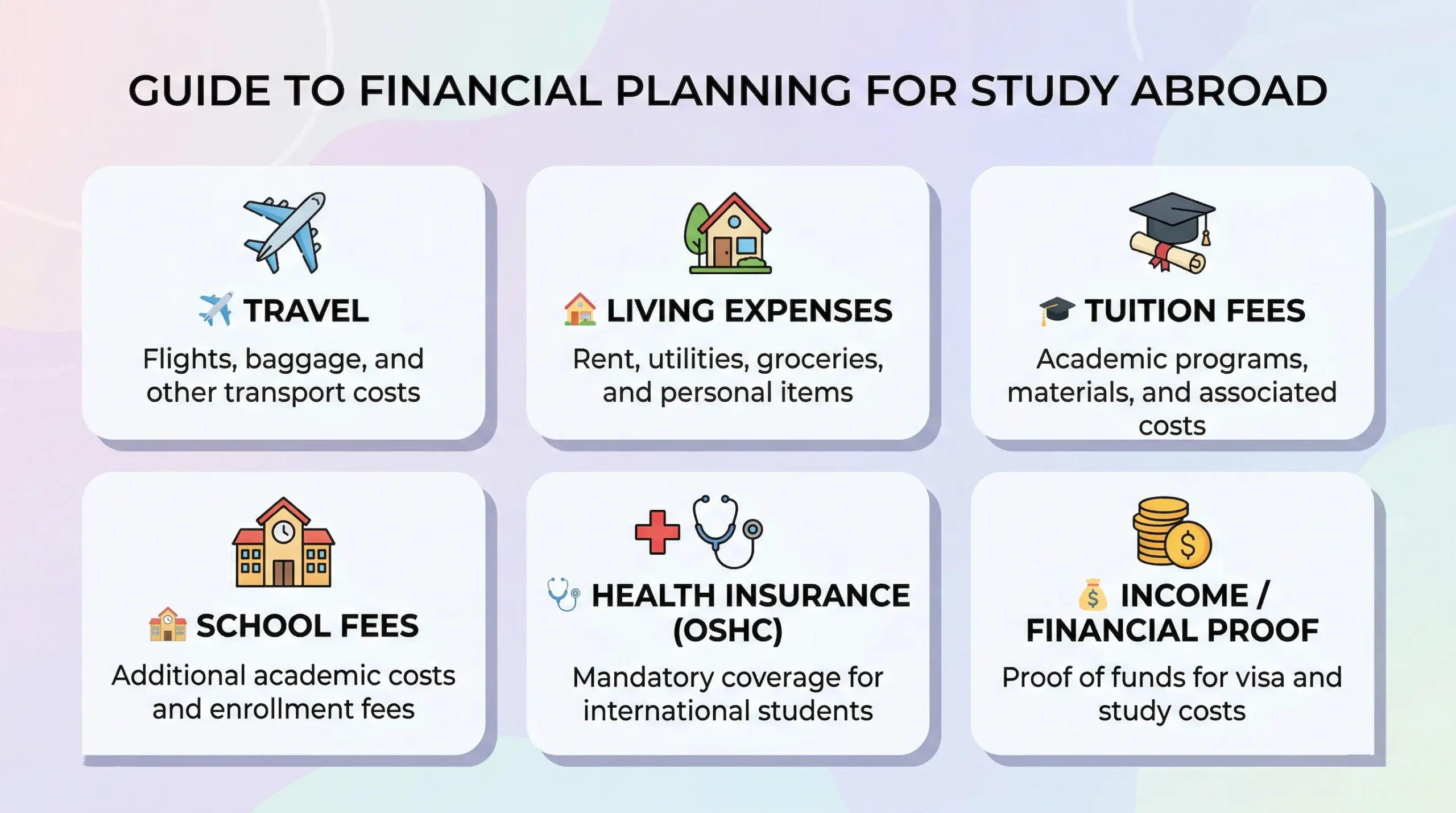
You may show funds through bank statements, term deposits, education loans, or evidence of an acceptable sponsor. In some cases, demonstrating your parents’ or spouse’s income at or above the minimum Home Affairs threshold can also be used.
Important: Financial thresholds are updated regularly. Always use the latest figures and tools provided on the Department of Home Affairs website and consider seeking advice from a registered migration agent before lodging.
Documents Checklist for Dependent Visa Subclass 500
Below is a general document checklist. Exact requirements depend on your circumstances and can change, so always confirm against current Home Affairs instructions.
1. Identity and relationship documents
- Current passports for all applicants
- Birth certificates for the student and each child
- Marriage certificate or evidence of de facto relationship
- Household registration or family composition documents (where relevant)
2. Visa and application forms
- Student visa application for the primary applicant (online via ImmiAccount)
- Relevant forms for dependants (for example, forms dealing with nomination of student dependants or subsequent entrants, if requested in your scenario)
3. Financial documents
- Recent bank statements or term deposit statements
- Evidence of education loans or other acceptable funding
- Proof of income for sponsors (payslips, tax returns, employment letters)
4. Health, insurance and character documents
- OSHC certificates listing all family members
- Health examination results (where required)
- Police clearances for applicants over the relevant age threshold
5. Study and schooling evidence
- Confirmation of Enrolment (CoE) for the student
- Evidence of planned school enrolment for school‑aged children, where required
How to Apply for a Dependent Visa (Step‑by‑Step)
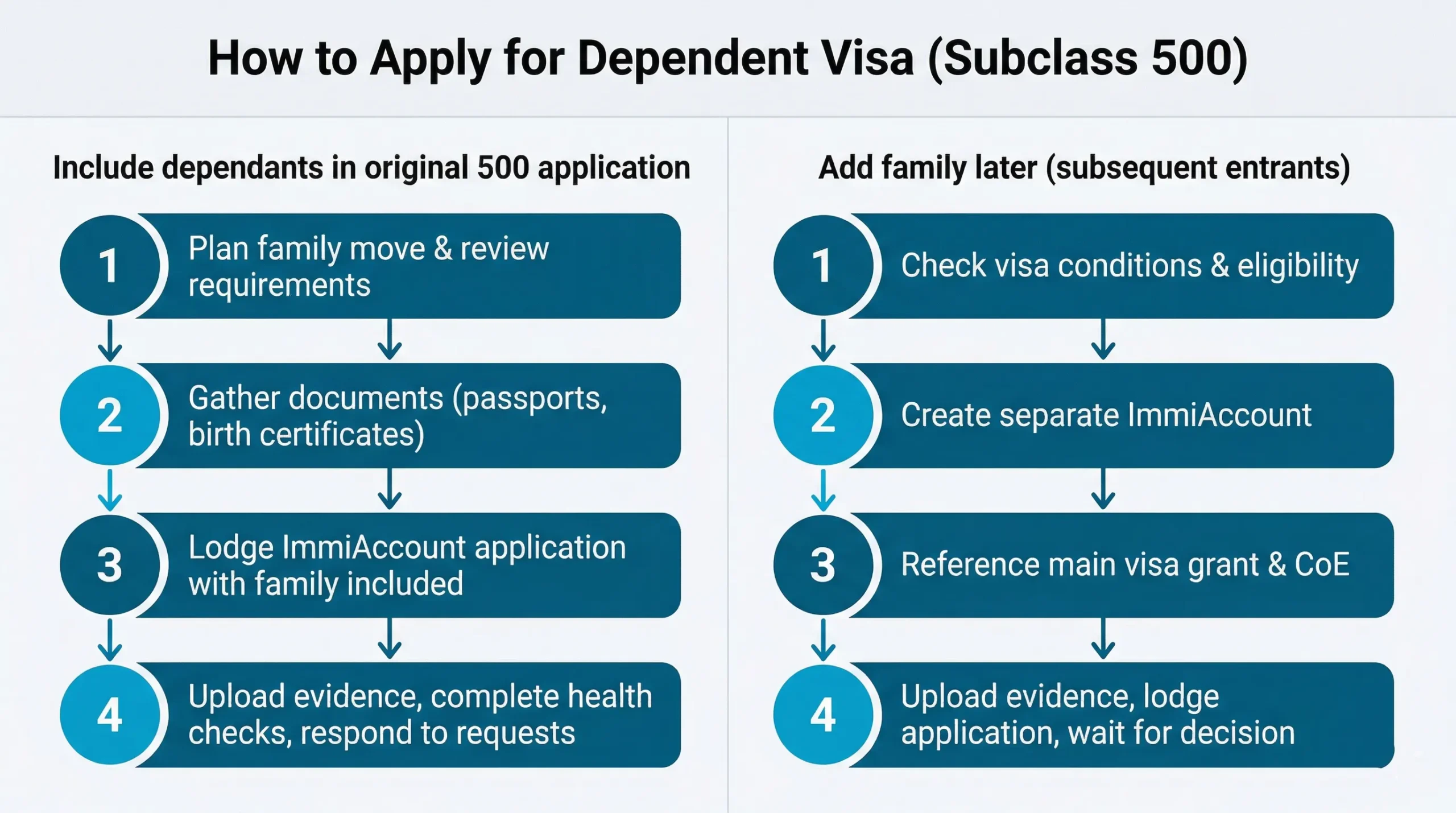
Dependants can either be included in the original Student Visa (Subclass 500) application or added later as subsequent entrants.
Expert Australian Migration Guidance
Navigating the complexities of your visa journey is easier with professionals. Start your Australian dream today.
Book ConsultationIncluding dependants in the original 500 application
- Plan your family’s move: decide whether your partner and/or children will travel with you from the start.
- Gather documents: relationship, identity, financial and health documents for all applicants.
- Create or log in to ImmiAccount and complete the online Student Visa (Subclass 500) application, ensuring you add each family member who will travel.
- Upload evidence for each person, pay the visa application charges and submit.
- Respond promptly to any requests for further information from Home Affairs.
Adding family later as “subsequent entrants”
If your family will join you after you have already been granted a 500 visa, they may apply as subsequent entrants.
- Check your visa conditions to confirm whether dependants can join you and on what basis.
- Your partner or child generally creates their own ImmiAccount and selects the appropriate student dependent/subsequent entrant option.
- They reference your student visa details and CoE where required.
- Upload relationship, financial, schooling and health evidence.
- Pay the relevant application charges and submit.
- Monitor ImmiAccount for updates and provide any extra documents requested.
Processing Time & Visa Costs (As of 2026)
Processing times
Home Affairs publishes indicative processing times for Student Visa (Subclass 500) applications and related subsequent entrant visas. As of 2026, publicly available data suggests that many applications are finalised within 21 days to 6 months, but some can take longer.
Processing can be slower if:
- Information or documents are missing
- Health or character issues require further checks
- There is a high volume of applications
Visa application charges
Visa application charges change regularly. However, Home Affairs fee tables as of early 2026 show that:
- There is a base application charge for the primary Student Visa (Subclass 500) of around AUD 2000.00, and
- Additional applicant charges apply for each family member, which differ for adults and children (for example, an adult partner and child may attract separate additional charges).
Extra surcharges can apply when paying with certain card types or PayPal.
Work & Study Rights for Dependents
Work and study rights for dependants are closely linked to the primary student’s course type and visa conditions.
In general terms:
- A partner may have work rights in Australia, but the number of hours and type of work can depend on whether the student is enrolled in, for example, an undergraduate program versus a Master’s or PhD.
- School‑aged children usually need to be enrolled in school and may need to pay public school fees, which can vary by state or territory.
Because these settings change, you should carefully review:
- The visa grant notice for each family member, and
- The latest guidance is on the Department of Home Affairs website.
If you are unsure, seek individual advice before relying on any assumed work rights.
Common Refusal Reasons & How to Avoid Them
Even strong applications can be refused. Some recurring issues include:
- Weak or inconsistent relationship evidence (few joint documents, conflicting statements)
- Insufficient financial capacity or unexplained large deposits
- Gaps in study history or unclear study intentions affecting GTE/Genuine Student assessment
- Missing documents or failing to respond to requests in time
To reduce risk:
- Start gathering relationship and financial evidence early.
- Ensure your GTE/Genuine Student explanation is honest, detailed, and consistent with your documents.
- Double‑check all forms and uploads before submitting.
A registered migration agent can review your application and highlight areas that may need strengthening before you lodge.
How The Migration Can Help
Applying for a dependent visa linked to a Student Visa Subclass 500 can feel overwhelming, especially when your family’s future is involved. Our team at The Migration works with international students and their families across Sydney and Melbourne, as well as clients applying from overseas.
We can assist with:
- Assessing whether your partner and children are likely to qualify as dependents
- Reviewing and organising relationship and financial evidence
- Drafting or refining your GTE/Genuine Student explanation
- Preparing and lodging subsequent entrant applications through ImmiAccount
- Coordinating with you on updated Home Affairs policies and document requests
If you would like tailored advice, consider booking a consultation before you apply.
Conclusion
Bringing your partner and children to Australia on a dependent visa (Subclass 500) can allow your family to stay together while you study. Success usually depends on strong relationship evidence, realistic financial planning, and carefully prepared documents that meet current Home Affairs requirements.
Because every family’s situation is different and visa rules change, it’s important not to rely on outdated examples or generic online advice. Checking the latest information on the Department of Home Affairs website and seeking guidance from a registered migration agent where needed can help you make informed decisions and avoid costly mistakes.
If you’re planning to bring your family to Australia on a Student Visa (Subclass 500), consider speaking with The Migration for personalised, MARA‑aligned advice.