

If you are in Australia on a bridging visa and wondering whether Can I apply for another visa on a Bridging visa?, you are not alone. Many people in Sydney, Melbourne and across Australia end up on a bridging visa after lodging a new application or experiencing a refusal, and are unsure what their options are.
In many situations, it may be possible to apply for another visa while you are on a bridging visa. However, your options are strongly shaped by:
- Whether you still hold a substantive visa
- Whether you are affected by the Section 48 bar
- The type of visa you want to apply for next, and whether you meet its criteria
This article gives a high-level, MARA-aligned overview of how this works as of 2026. It is general information only and is not legal advice. Before you apply, consider speaking with a registered migration agent who can review your full history.
If you are currently on a bridging visa and unsure about your next step, you can book a consultation with a registered migration agent to discuss your options in detail.
What Is a Bridging Visa and Why Do People End Up on One?
A bridging visa is a temporary visa that keeps you lawfully in Australia while a particular event or process is underway. Common situations where people hold a bridging visa include:
- You have lodged a new substantive visa application in Australia and are waiting for a decision.
- Your previous substantive visa has expired, but you have a new application in the system.
- You have had a visa refused or cancelled, and you are seeking review or considering your options.
- The Department of Home Affairs has granted a bridging visa to manage your status while another matter resolved.
There are several types of bridging visas (such as Bridging Visa A, B, C and E), each with different conditions around work, travel and when they come into effect. What they have in common is that they do not create a pathway to permanent residency on their own; they sit in the background while another application or process is running.
Can I Apply for Another Visa While on a Bridging Visa in Australia?
In many cases, yes, you may be able to apply for another visa while you are on a bridging visa in Australia, but it is not automatic.
Key questions that affect your ability to apply include:
- Do you currently hold a substantive visa (such as a student, visitor or skilled visa), or only a bridging visa?
- Have you had a visa refused or cancelled since you last entered Australia?
- Are you affected by the Section 48 bar?
- Is the new visa you want to apply for one that can be lodged onshore, or does it require an application from outside Australia?
If you are only on a bridging visa and have had a visa refused or cancelled in Australia, Section 48 may limit the types of visas you can apply for without leaving the country.
How Section 48 Bar Affects Applying for Another Visa
Many people search for information about a bridging visa and Section 48 bar because they have had a refusal or cancellation and are worried that they cannot apply for anything else.
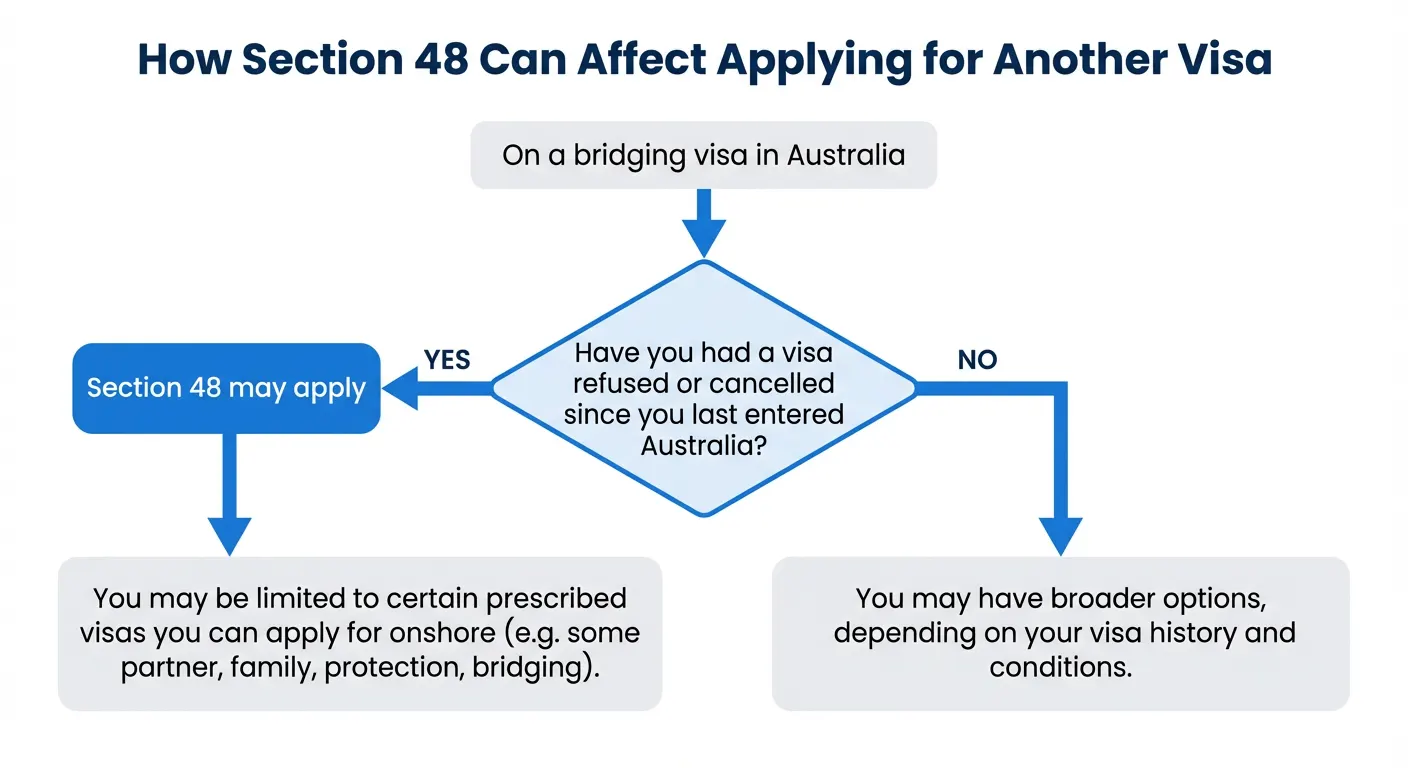
What is Section 48?
Section 48 of the Migration Act 1958 can apply if:
- You are in Australia, and
- You do not hold a substantive visa, and
- Since you last entered Australia, you have had a visa refused or cancelled (with some exceptions, such as certain bridging visas).
If Section 48 applies to you, you are generally barred from applying for most other visas while you remain in Australia. You are only permitted to apply onshore for a limited list of prescribed visas set out in the migration regulations.
These prescribed visas commonly include, for example:
- Certain partner visas
- Certain child or family visas
- Protection visas
- Resolution of Status and some other specified visas
- Some bridging visas and, in limited situations, certain skilled or regional visas
If the visa you are hoping to apply for is not on that prescribed list, you may need to leave Australia and lodge the application from offshore. Because the list is technical and can change, you should always check the current law or obtain professional advice before making any decision.
As of 2026, the Section 48 framework remains strict and complex. A small change in your visa history can significantly alter what you can or cannot do onshore.
Types of Visas You May Be Able to Apply for While on a Bridging Visa
The visas you may be able to apply for while you are on a bridging visa depend on your circumstances and whether Section 48 applies. Examples can include:
Expert Australian Migration Guidance
Navigating the complexities of your visa journey is easier with professionals. Start your Australian dream today.
Book Consultation- Partner visa (onshore): In some situations, people apply for a partner visa while on a bridging visa, where they are in a genuine, continuing relationship with an Australian citizen or permanent resident and meet the specific criteria.
- Protection visa: Available to people who fear persecution or significant harm if returned to their home country and who meet strict protection criteria.
- Certain family or child visas: In limited situations, where the regulations allow onshore lodgement.
- Skilled or regional visas: In some cases, certain skilled or employer-sponsored regional visas are prescribed for people affected by Section 48, but the rules are technical and change over time.
- Further bridging visas: For example, where you need to remain lawfully in Australia while another process or application is resolved.
Whether you can apply for another visa on a bridging visa in Australia will always come back to the eligibility rules for that particular visa and your personal history. Do not assume that an example that applied to a friend will necessarily apply to you.
Key Factors That Influence Whether You Can Apply for Another Visa
When a migration agent reviews whether you can lodge another visa application while on a bridging visa, they will usually look at factors such as:
- Your current status: Do you still hold a substantive visa, or only a bridging visa?
- Any refusals or cancellations: Have you had a visa application refused or a visa cancelled, since you last entered Australia (and if so, which provisions were used)?
- Visa conditions: Do you have any conditions, such as a “no further stay” condition, that may limit onshore applications?
- The new visa’s criteria: Do you meet the age, English, skills, health, character and relationship requirements for the next visa you are considering?
- Timing and location: Does the new visa allow onshore lodgement, or must the application be lodged from outside Australia?
- Compliance history: Have you ever been unlawful in Australia, and if so, for how long and under what circumstances?
Because these factors interact, even a seemingly small detail can affect what is possible.
When You Should Get Professional Advice
You should strongly consider speaking with a registered migration agent or immigration lawyer if:
- You are on a bridging visa after a visa refusal or cancellation.
- You think you may be affected by the Section 48 bar.
- You have previously been unlawful in Australia or had a complex visa history.
- You are considering a major change of pathway, such as switching from a skilled or student visa plan to a partner or protection pathway.
- You are unsure whether you must leave Australia to apply for the visa you are interested in.
An adviser can review your full history, check current law and policy settings as of 2026, and map out realistic options so you can avoid unintentionally becoming unlawful or lodging a weak application.
How Our Sydney & Melbourne Migration Agents Can Help
At The Migration, we regularly assist people in Sydney, Melbourne and across Australia who are on bridging visas and unsure what to do next.
Our registered migration agents can:
- Review your visa history, refusals, cancellations and conditions.
- Check whether Section 48 applies and which visas you may still be able to apply for onshore.
- Assess whether an onshore application (such as a partner, family or protection visa) is realistic in your situation.
- Explain when it may be safer or more strategic to leave Australia and apply from offshore.
- Help you prepare a well-documented application that aligns with Department of Home Affairs requirements.
Conclusion
Being on a bridging visa in Australia does not automatically prevent you from applying for another visa, but the rules are strict and highly dependent on your history.
As of 2026:
- Many people can apply for another visa while on a bridging visa, particularly in partner, family or protection pathways.
- If you have had a visa refused or cancelled and no longer hold a substantive visa, the Section 48 bar may limit the visas you can apply for onshore.
- In other cases, you may need to depart Australia and apply from overseas if the visa you want is not one of the prescribed onshore options.
Because the stakes are high, including the risk of becoming unlawful or harming your future options, it is important not to rely on generic information alone. Book a consultation with our registered migration agent to help you understand where you stand and plan a safer pathway.