
If you are searching for Australian passport visa-free countries, the short answer is this: Australian citizens can still travel to many destinations without applying for a traditional visa in advance, but that does not always mean the process is completely paperwork-free.
As of 2026, some countries allow truly visa-free entry for short tourist stays, while others require an eVisa, visa on arrival, eTA, ESTA, or other electronic pre-travel approval. Entry conditions can also change quickly, and border authorities usually still expect you to meet standard requirements such as passport validity, proof of onward travel, and evidence that you are visiting for a genuine short-term purpose.
For readers in Sydney, Melbourne, and across Australia who want a practical, easy-to-scan guide, this article breaks down the main difference between visa-free, visa on arrival, and electronic travel authorisation so you can plan more confidently.
Can Australians travel without a visa?
Yes, Australian passport holders can visit many destinations without a traditional visa in advance for short tourism or business trips.
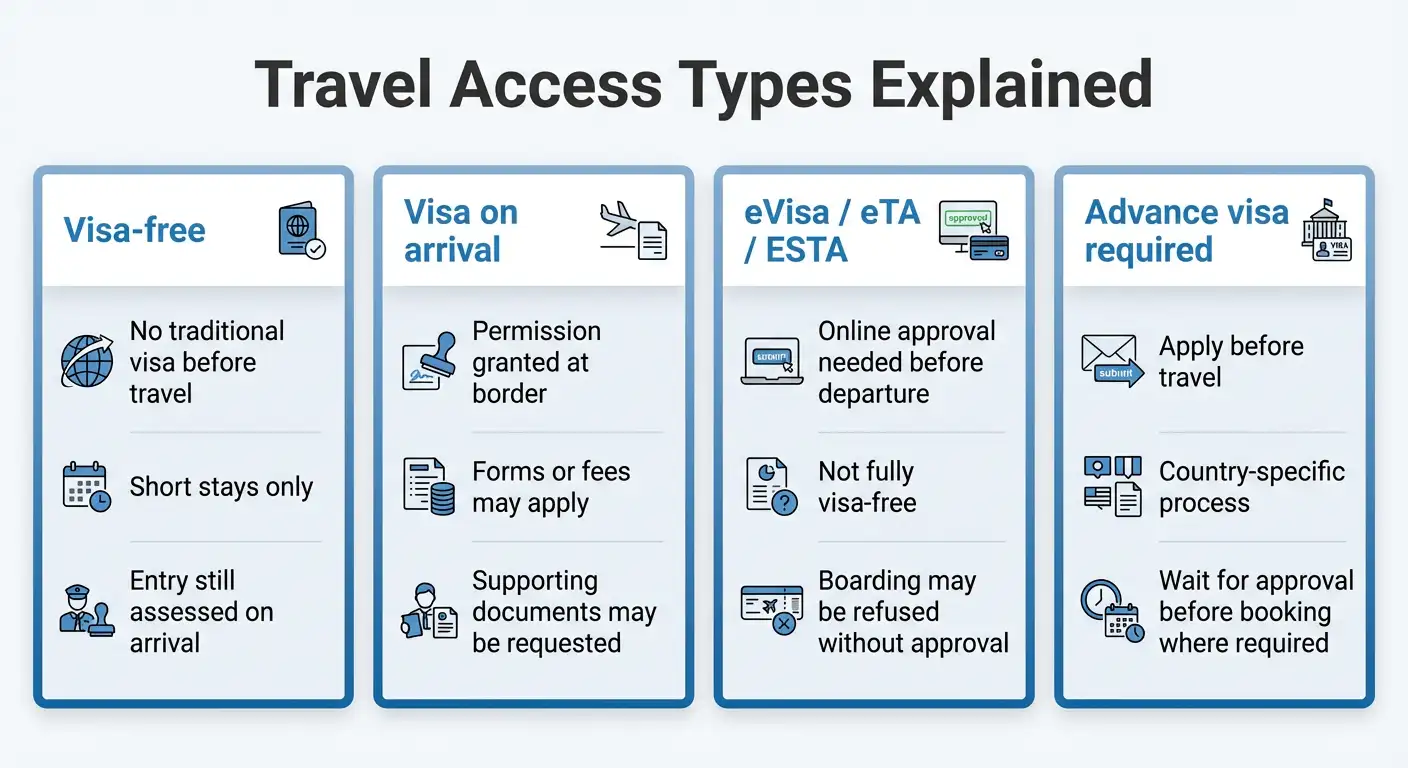
However, always separate these four access types:
- Visa-free: no traditional visa is required before departure for a short stay.
- Visa on arrival: You receive permission at the border, but there may still be forms, fees, or supporting documents.
- eVisa / eTA / ESTA: you need online approval before you travel, even though you are not applying for a full consular visa.
- Advance visa required: you must apply before travel through the destination country’s official process.
That distinction matters because many people use “visa-free” loosely, even when a destination still requires electronic approval before boarding.
What counts as visa-free travel for Australians?
According to the Australian Government’s Smartraveller visa guidance, Australians should always check the visa and entry rules for each destination before travel. Even where a country allows visa-free entry, you may still need:
- a passport with enough validity for the whole trip
- proof of onward or return travel
- evidence of funds
- accommodation details
- proof that your visit matches the permitted short-stay purpose
Visa-free travel also does not guarantee entry. Border authorities in the destination country make the final decision when you arrive.
Which countries can Australians visit without a visa?
Below is a practical 2026 snapshot based on the current live article structure, updated to improve clarity and accuracy. It focuses on commonly searched destinations rather than promising an exhaustive country-by-country legal database.
Before you travel, confirm the latest entry rules directly with the destination authority and the relevant Australian Government travel advice page.
Europe
Many Australians search for European options first. For much of Europe, the key rule is the Schengen 90/180 rule, explained on the official Smartraveller Schengen guidance.
|
Country / Area |
Typical access |
Typical short-stay allowance |
Important note |
|
United Kingdom |
Visa-free |
Up to 6 months |
Always check current entry conditions before departure. |
|
Ireland |
Visa-free |
Short-stay access is usually available |
Conditions can vary depending on the purpose of travel. |
|
France |
Visa-free (Schengen) |
Up to 90 days in any 180-day period |
Count all time spent across Schengen countries together. |
|
Germany |
Visa-free (Schengen) |
Up to 90 days in any 180-day period |
Passport validity and onward travel can still be checked. |
|
Italy |
Visa-free (Schengen) |
Up to 90 days in any 180-day period |
Do not assume each Schengen country gives a separate 90 days. |
Asia
Australian passport visa-free countries in Asia remain popular for shorter holidays and business travel.
|
Country / Area |
Typical access |
Typical short-stay allowance |
Important note |
|
Japan |
Visa-free |
Up to 90 days |
The official Smartraveller Japan page advises checking conditions before travel. |
|
Singapore |
Visa-free |
Short-stay access is commonly available |
Entry conditions can still change at short notice. |
|
Malaysia |
Visa-free |
Short-stay access is commonly available |
Check passport validity and local declarations. |
|
Hong Kong |
Visa-free |
Short-stay access is commonly available |
Always verify local rules before departure. |
|
Philippines |
Visa-free |
Short-stay access is commonly available |
Onward travel proof may still be requested. |
Americas
This is where many travellers confuse visa-free access with electronic pre-approval. Some destinations are simple, but others still require online authorisation before you fly.
|
Country / Area |
Typical access |
Typical short-stay allowance |
Important note |
|
Mexico |
Visa-free |
Short-stay access is commonly available |
Entry conditions are still assessed on arrival. |
|
Chile |
Visa-free |
Short-stay access is commonly available |
Always confirm the latest local entry rules. |
|
Argentina |
Visa-free |
Short-stay access is commonly available |
Check passport validity and trip purpose rules. |
|
Barbados |
Visa-free |
Short-stay access is commonly available |
Return or onward ticket evidence may be required. |
|
Canada |
An eTA is required for air travel |
Not treated as fully visa-free in practice |
See the official Smartraveller Canada page. |
Africa
African entry settings can vary more than travellers expect, so always verify the destination-specific rules before you rely on an older online list.
|
Country / Area |
Typical access |
Typical short-stay allowance |
Important note |
|
South Africa |
Visa-free Expert Australian Migration GuidanceNavigating the complexities of your visa journey is easier with professionals. Start your Australian dream today. Book Consultation |
Short-stay access is commonly available |
Passport validity rules are important. |
|
Morocco |
Visa-free |
Short-stay access is commonly available |
Requirements can change, so check official updates. |
|
Botswana |
Visa-free |
Short-stay access is commonly available |
Border officials may still ask about accommodation and funds. |
|
Rwanda |
Access rules should be checked carefully |
Varies |
Do not rely on older summaries without confirming the current rule. |
|
Seychelles |
Short-stay access available with conditions |
Varies |
Travel documents and local approvals may still be required. |
Oceania
Australian travellers often assume Oceania is automatically straightforward, but each destination still has its own border settings.
|
Country / Area |
Typical access |
Typical short-stay allowance |
Important note |
|
New Zealand |
Special access for Australians |
Commonly straightforward for Australian citizens |
Check the exact conditions that apply to your travel purpose. |
|
Fiji |
Visa-free |
Short-stay access is commonly available |
Passport validity and proof of onward travel may still matter. |
|
Cook Islands |
Visa-free |
Short-stay access is commonly available |
Always verify current local conditions. |
|
Vanuatu |
Visa-free |
Short-stay access is commonly available |
Check health and arrival requirements before departure. |
|
Samoa |
Visa-free/streamlined short-stay access |
Short-stay access is commonly available |
Supporting travel documents may still be requested. |
Visa on arrival, eVisa, and electronic travel authorisation: why the difference matters
One of the most useful upgrades for this article is making it clear that not every easy-entry destination is truly visa-free.
United States: ESTA still required
Australian citizens may be able to travel to the United States under the Visa Waiver Program for short tourism or business visits, but the official Smartraveller USA guidance makes it clear that you still need an ESTA before travel. That means the USA is not a destination where you simply turn up without pre-approval.
Canada: eTA for most air travellers
For Canada, the official Smartraveller Canada page says Australians usually need an eTA if they are flying to or transiting through Canada. Again, this is easier than a traditional visa, but it is not the same as fully visa-free entry.
Europe: Schengen is visa-free, but ETIAS is coming
Australians can currently visit Schengen countries for short stays without a visa, generally up to 90 days within any 180-day period. However, the official Smartraveller Schengen page also notes that ETIAS is expected to apply to visa-exempt travellers when it becomes operational. That means Europe remains highly accessible, but travellers should watch for rollout updates.
Common entry requirements Australians should still check
Even when a country appears on a list of countries Australians can visit without a visa, the Australian Government’s Smartraveller visa advice still supports checking the following before you leave:
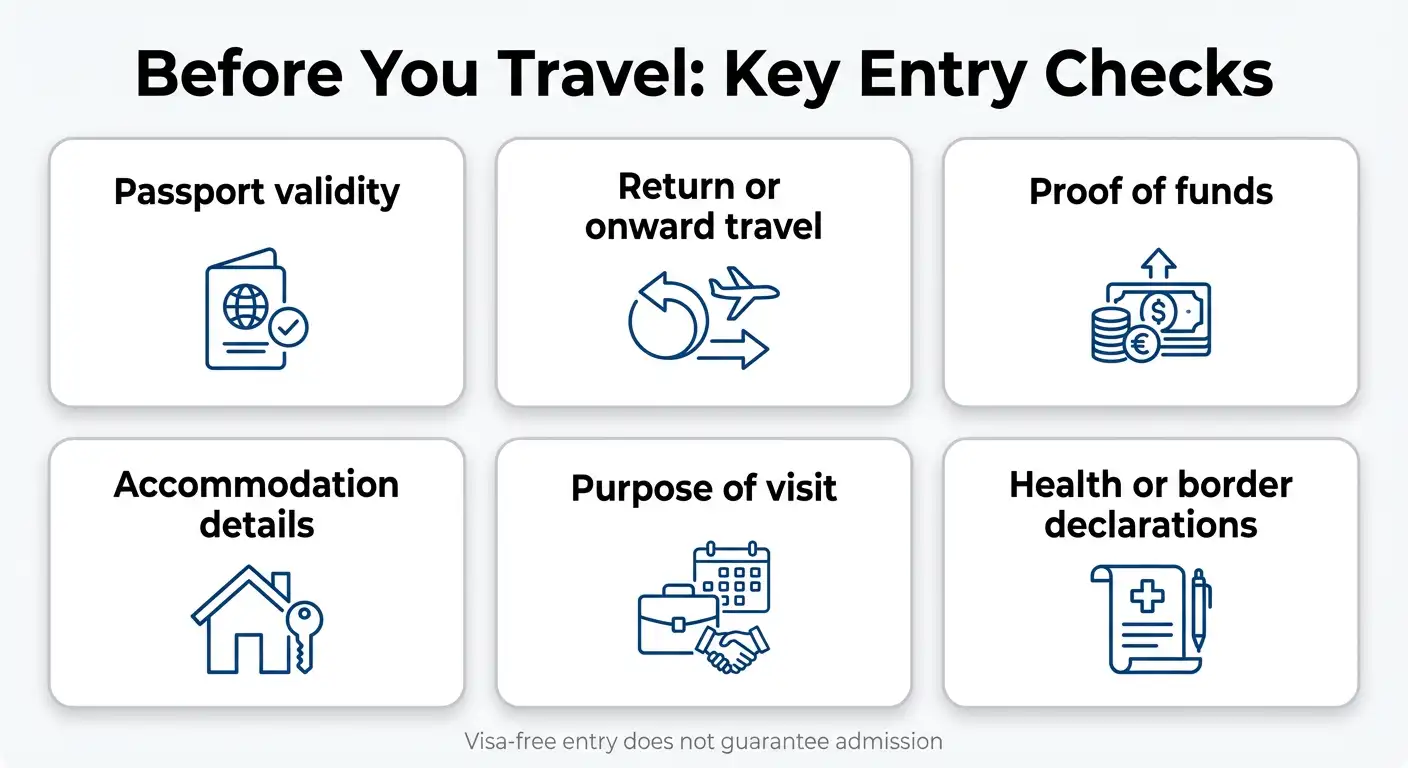
- Passport validity: Many countries want your passport to remain valid beyond your planned departure date.
- Return or onward travel: border officials may ask to see your ticket out of the country.
- Proof of funds: You may need to show that you can support yourself during the trip.
- Accommodation details: hotel bookings, an address, or local contact details may be requested.
- Purpose of visit: tourism, business meetings, study, and remote work are not always treated the same way.
- Health and border declarations: some destinations apply health forms or local arrival declarations.
If your trip involves anything outside a simple holiday for example, extended stays, repeat entries, business activities, or a complex passport history it is worth checking the rules in detail before you travel.
If your travel plans are not straightforward, you can explore Visitor Visa options or book a consultation for tailored advice before committing to flights.
Do Australian passport holders need a visa for Europe?
Usually, Australians do not need a traditional visa for short tourist travel in the Schengen Area, but there are still rules to follow.
The main point is the 90 days in any 180-day period rule across the Schengen Area as a whole. In other words, time spent in France, Germany, Italy, Spain, and other Schengen countries is counted together rather than separately.
This is one of the most common areas of confusion for travellers who assume they can reset the clock by moving between European countries. In 2026, Australians should also keep watching official updates about ETIAS, because pre-travel electronic authorisation is expected to become part of the process for visa-exempt travellers once the system is fully introduced.
When should Australians get visa advice before they travel?
Most simple tourist trips do not require migration advice. But there are situations where professional guidance can help reduce risk and confusion.
You may want advice before travel if:
- You hold more than one nationality or passport
- You have had a previous visa refusal, cancellation, overstay, or border issue
- You are unsure whether your trip is still classed as tourism
- You plan frequent or longer stays
- You are travelling to meet family, handle a sensitive legal matter, or combine business and personal activities
- You want help understanding whether an eVisa, eTA, ESTA, or other approval still applies to you
For readers who prefer speaking with someone remotely, The Migration also offers online/remote consultations.
Conclusion
For Australians, international travel remains relatively accessible, but the phrase Australian passport visa-free countries holders can be misleading if you do not look closely at the entry category.
Some destinations are genuinely visa-free for short stays. Others require an ESTA, eTA, eVisa, visa on arrival, or another form of approval before you travel or at the border. That is why the safest approach in 2026 is to use country lists as a starting point only, then confirm the official rules before you book.
If your case is more complicated than a standard holiday or if you are not sure whether normal visa-free entry applies to you, you can book a consultation with a MARA-registered migration agent for tailored guidance.