
Your Australian Career Starts Here, Skills in Demand Visa (Subclass 482) Core Skills Stream
If an Australian employer wants to hire and cannot find a suitable local worker to fill the role, the employer sponsored visa 482 — officially known as the Skills in Demand (SID) visa — is your pathway into Australia. The Core Skills stream is for skilled workers nominated to fill positions listed on the Core Skills Occupation List (CSOL).
This is a temporary visa that gives you the right to live and work in Australia for up to four years, with a genuine pathway to permanent residency. The process is structured, time-sensitive, and demanding — but with the right guidance, it is absolutely achievable.
Key Facts
Stay
Permanently
Cost
From AUD4,910.00
Work Rights
Full work rights, anywhere in Australia
Family
Include your partner and dependent children
Citizenship
Pathway to Australian citizenship
What Is the Skills in Demand Visa (Subclass 482) Core Skills Stream?
The temporary skill shortage visa subclass 482 Core Skills stream replaced the old TSS short-term and medium-term visa streams. It is now the primary route for most employer-sponsored workers coming to Australia. Your employer must be an approved Standard Business Sponsor, and the role you are being hired for must be listed on the Core Skills Occupation List.
This is not a points-based visa. You do not need to apply independently or submit an Expression of Interest. Your employer drives the nomination — and once their nomination is approved, you apply for your own visa.
The Core Skills stream sits between the old short-term and the Specialist Skills stream. It is designed for skilled tradespeople, professionals, and experienced workers across a wide range of industries. If your occupation is on the CSOL and you meet the requirements, this is likely your most direct route into Australia.
What You Can Do on This Skilled Worker Visa Australia
- Work full-time in your nominated occupation for your sponsoring employer or an associated entity
- Travel to and from Australia as many times as you want while the visa is valid
- Include your partner and dependent children in your application
- Your family members can live, work, and study in Australia
- If eligible, apply for permanent residency through the Employer Nomination Scheme (Subclass 186)
482 Visa Eligibility Core Skills Stream
Understanding what the requirements for the 482 visa are before you apply saves time, money, and unnecessary stress. Here is exactly what you need to meet:
Your nominated employer must have lodged a nomination for an eligible occupation. Caveats apply to some CSOL occupations meaning even if your occupation is listed, certain circumstances can make a nomination ineligible. We check this before a single form is filled.
You need a minimum of 12 months relevant full-time work experience in your nominated occupation or a closely related field, gained within the last 5 years. Part-time or casual work must equate to at least 12 months full-time. Experience from clinical placements or industry internships may count in certain occupations.
Your employer must pay you at least the AMSR for your occupation and no less than the CSIT. These thresholds are indexed annually. If your salary is AUD 250,000 or above, the AMSR requirement does not apply.
Yes for some occupations, a skills assessment by Trades Recognition Australia (TRA) or VETASSESS is mandatory. If it is mandatory for your occupation, the assessment must be commenced before you lodge your visa application. It cannot be added after. We strongly recommend completing it before applying to avoid delays or invalidity.
You must demonstrate English proficiency that meets minimum standards unless an exemption applies. Accepted tests include IELTS, PTE, TOEFL, and others. Results must be no more than 3 years old.
You and any family members aged 16 or over applying with you must pass health and character checks. Health examinations are generally valid for 12 months. Arrange these before lodging where possible.
You must work in your nominated occupation and only for your nominating employer or an associated entity (in most cases). You must begin employment within 90 days of entering Australia or of your visa grant date if already in Australia.
You must hold a substantive visa or a Bridging Visa A, B or C at the time of application if you are inside Australia.
Not Sure Which Visa Fits You?
Step-by-Step Process How to Apply for the 482 Visa Core Skills Stream
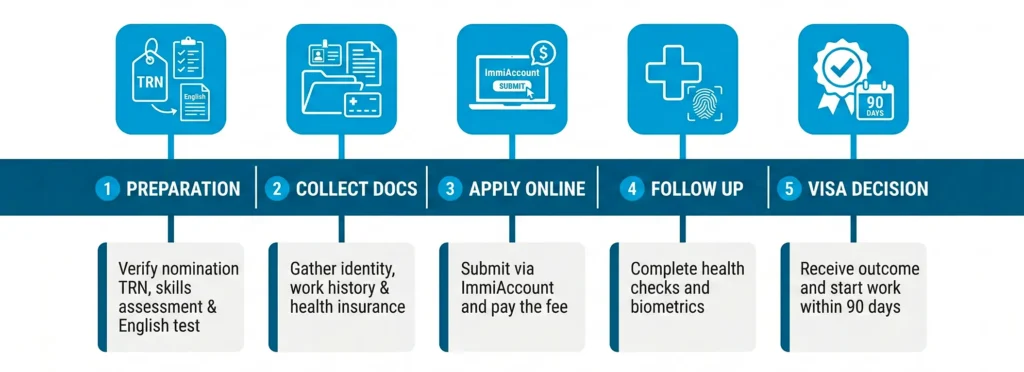
Step 1: Preparation Before You Apply
Before you lodge anything, make sure the following are in place:
- Confirm your employer has lodged or will lodge a nomination and obtain the Transaction Reference Number (TRN) from them
- Check if a skills assessment is mandatory for your occupation. If yes, commence it before lodging. You need the reference number to include in your application
- Book and complete your English language test if required (results must not be more than 3 years old)
- Arrange health examinations — you can complete these before applying or wait for the Department’s instruction (completing early reduces delays)
- Check your passport is valid and get a new one before applying if needed
- If you want migration assistance, engage a registered MARA agent, legal practitioner, or exempt person. Use Form 956 to appoint them
Step 2: Gather Your Documents
This is the 482 visa document checklist for the Core Skills stream. Every item below must be addressed. Missing documentation is one of the most common reasons for delays and refusals.
- Current passport — photo page, personal details, issue and expiry dates
- Proof of name change if applicable — marriage certificate, deed poll, change of name documents from an Australian Registry of Births, Deaths and Marriages or equivalent overseas authority, or statutory declaration for minor differences
- Transaction Reference Number (TRN) from your employer's nomination application
- Skills assessment reference number (if mandatory for your occupation — required at lodgement, cannot be added later)
- For TRA assessments: include the relevant TRA skills assessment reference number
- For the occupation of Project and Program Administrator: include the VETASSESS skills assessment reference number
- If claiming an exemption from a mandatory skills assessment: include relevant evidence of the applicable exemption at lodgement
- Relevant qualification certificates — professional and educational
- Registration or licensing evidence if required for your occupation in the state/territory you will be working (must specify type of registration and registering authority details)
- For medical practitioners: written evidence from the relevant medical board confirming your qualifications are recognised and you are registered or will be given medical registration
- Employment references — must be on the employer's letterhead and include: referee's name, title, and contact details; your position; dates of service; covering a period sufficient to demonstrate skill level
- CV or résumé covering at least the last 5 years — must include full employment and educational history, dates and positions held, and referee contact details
- English language test results (IELTS, PTE, TOEFL, Cambridge or accepted equivalent) no more than 3 years old
- Evidence of exemption from English language requirements if applicable
- Evidence of adequate health insurance for you and any secondary applicants for the full duration of your intended stay — must cover medically necessary treatment including transport
- If your country has a reciprocal healthcare agreement with Australia, note this — confirm details through Services Australia
- Australian Federal Police (AFP) National Police Certificate — complete disclosure only (state/territory certificates are NOT accepted) — required if you have spent 12 months or more in Australia in the last 10 years since turning 16
- Overseas police certificates from every country where you spent 12 months or more in the last 10 years since turning 16 (including your home country)
- Military service records or discharge papers if you served in the armed forces of any country
- Form 80 — Personal Particulars for Character Assessment (if requested by the Department)
- Form 1221 — Additional Personal Particulars Information (if requested by the Department)
- Partner's identity documents — passport, proof of name change if applicable
- Character documents for your partner
- Documents about any other relationships if applicable
- Current marriage certificate (if married) OR
- De facto relationship evidence: joint bank account statements, billing accounts in joint names, joint leases or mortgages, documents showing you have lived at the same address
- Passport pages — photo, personal details, issue and expiry dates (children under 5 can be included without a passport)
- Birth certificates or family book showing names of both parents
- Adoption papers if applicable
- Character documents if applicable (for children aged 16–17)
- Parental responsibility consent: Form 1229 — consent from anyone with legal rights to decide where the child lives who is not applying with you. Must include a photo ID of the person who signed (passport or driver's licence)
- Or a statutory declaration from that person giving consent
- Identity documents
- Documents about other relationships if applicable
- Character documents
- Form 47a — Details of a Child or Other Dependent Family Member Aged 18 Years or Over
- Proof of relationship — birth certificate or adoption papers
- Evidence of financial dependency for at least 12 months: proof they live with you, their tax records, or proof they are currently studying
- Form 956A — Appointment or withdrawal of an authorised recipient (for correspondence only)
- Form 956 — Appointment of a registered migration agent, legal practitioner or exempt person (for immigration assistance)
- Translate ALL non-English documents into English. In Australia: use a NAATI-accredited translator. Outside Australia: translator must include their full name, address, phone number, qualifications and experience in the language being translated — all in English
- Scan or photograph all documents in colour — must be clear and readable
- Multi-page documents must be saved as one file
- Attach each document only once, even if it supports more than one requirement
- Documents do not need to be certified
Step 3: Apply Online via ImmiAccount
- Log in or create an ImmiAccount on the Department of Home Affairs website
- Select New Application → Family or Skilled → relevant visa subclass
- Complete the online application form accurately — providing false information can result in refusal and a 10-year ban on further applications
- Attach all supporting documents (limit: 100 documents per person — this cannot be increased)
- Provide your own phone number and email address, not just your sponsor’s
- Pay the visa application charge — the Department will not process your application until payment is received
- Note your Transaction Reference Number (TRN)
- If applying in Australia: you must hold a substantive visa or Bridging Visa A, B or C at time of lodgement. You can be in or outside Australia when you apply and when the Department decides your application — but not in immigration clearance
Step 4: After You Apply
- Give your TRN to your employer (sponsor) if they have not already submitted the nomination
- Your employer must apply to sponsor you — we must have the nomination approved before we can grant your visa
- Complete health examinations if you have not done so already — results are valid for 12 months from examination date; health undertaking valid for 6 months
- Provide the AFP National Police Certificate and overseas police certificates if you have not already
- Upload any missing documents to ImmiAccount as soon as possible
- If you cannot upload: contact the Department through the Partner Processing Enquiry Form
- If in Australia and your current visa expires before a decision is made: your Bridging Visa A activates automatically — do NOT ask the Department to cancel your current visa (doing so removes your Bridging Visa eligibility)
- You can travel if your current visa permits, but if on a Bridging Visa, check travel conditions carefully before leaving
- Notify the Department of any changes: contact details or address, passport changes, marital or de facto status, birth of a child, or if you wish to withdraw your application
Step 5: Visa Decision
You can be in or outside Australia when the decision is made.
- You can be in or outside Australia when the Department decides your application
- The Department must have approved your employer’s nomination before they can grant your visa
- If granted: you will receive your visa grant number, the date your visa starts, and your visa conditions in writing — keep a copy with you in Australia at all times
- If refused: you will receive written reasons for the refusal and information about any right to review — the application fee is not refunded
- Check your visa details and conditions at any time using VEVO (Visa Entitlement Verification Online)
482 Visa Cost
- Item
- Amount
- Main applicant visa charge
- AUD 3,210.00
- Each dependent aged 18 or over
- AUD 3,210.00
- Each dependent under 18
- AUD 805.00
The 482 visa cost above is the government charge only. Use the visa pricing estimator on the Home Affairs website to calculate your full estimated cost.
482 Visa Processing Time
482 visa processing time varies for every application. It depends on:
- Whether you submitted a complete application with all required documents
- How quickly you respond to any requests for further information
- How long external checks take (health, character, national security) and current application volumes.
The Department’s processing time guide shows recently decided applications — it is an indication only and does not apply to your specific case. The Department is not obligated to request further information before making a decision.
About This Visa
The employer sponsored visa 482 Core Skills stream is a temporary visa. You can stay in Australia for the period your employer nominates you for — up to a maximum of 4 years (up to 5 years for Hong Kong passport holders). Time spent outside Australia does not extend the visa.
Your visa is digitally linked to your passport — you will not receive a label. Your grant notification letter will contain your visa grant number, which you can use to check your details and conditions through VEVO at any time
Visa Expiry
If your visa is expiring and you want to continue working for your employer, they must submit a new nomination and you must apply for a new visa. You cannot extend this visa. If you lose your job, you have up to 180 days to find a new sponsor or make arrangements to leave Australia.
Your Obligations on This Visa
- Meet all visa conditions and obey Australian laws
- Begin your employment within 90 days of entering Australia (or of your visa grant date if you were in Australia when the visa was granted)
- Work only in your nominated occupation and only for your nominating employer (or associated entity in some cases)
- Maintain adequate health insurance for the full duration of your stay if you are not eligible for Medicare
- Notify the Department of any changes: phone number, email, address, passport details, employer changes, employment status changes (including promotions and changes in hours), relationship status, birth of a child
- If your employment ends, you have 180 days to find a new approved sponsor or depart Australia
- When working in Australia, you are protected by Australian workplace law — you have the same rights and entitlements as Australian workers
Which Occupations Qualify for the 482 Visa? Core Skills Occupation List
Which occupations qualify for the 482 visa under the Core Skills stream? Your nominated occupation must appear on the Core Skills Occupation List (CSOL). This temporary skill shortage list covers a broad range of trades, professional, technical, and skilled occupations across almost every industry.
However, caveats apply to some occupations. For example, a chef cannot be nominated for a position in a fast-food restaurant, limited-service restaurant, or fast-casual establishment — even if “chef” is on the CSOL.
These caveats can disqualify a nomination even when the occupation is listed. We check your specific occupation and circumstances against current CSOL caveats before your nomination is submitted.
The CSOL is updated regularly by the Australian Government. What is eligible today may change. We monitor these updates continuously on behalf of our clients.
What Is the Difference Between the Old TSS Visa and the Current 482 Visa?
The TSS visa Australia — the Temporary Skill Shortage visa — has been replaced by the Skills in Demand (SID) visa, which retains the Subclass 482 number. The old TSS had a Short-Term stream and a Medium-Term stream. These have been restructured into three new streams: Core Skills, Specialist Skills, and Labour Agreement. The old short-term stream no longer exists. Key changes include the introduction of the Core Skills Income Threshold (CSIT), updated occupation lists, annually indexed salary thresholds, and a clearer pathway to permanent residency.
🛡️ MARA Registered
Registered migration agents with 7+ years of trusted experience
⚡ Faster Processing
Complete applications reduce delays
🛡️ MARA Protection
Fully licensed MARA agents
Why Choose The Migration?
We understand that this is not just a visa. It is your career, your family, your future in Australia. We bring seven years of hands-on experience to every application we handle.
MARA Registered Agents
We are legally authorised to give immigration advice and communicate directly with the Department of Home Affairs on your behalf
Skills Assessment Management
We coordinate with TRA and VETASSESS to ensure your assessment is correctly timed, structured, and submitted
Document Preparation
Every document in your application is reviewed for accuracy, completeness, and compliance before submission
Occupation and CSOL Review
We verify your occupation, CSOL listing, and any caveats before a single dollar is spent
PR Roadmap Included
We map your journey from the 482 visa to permanent residency from day one
RFI Response
We handle all Department requests for information promptly and strategically, protecting your application at every stage
Your Questions Answered
What is the 482 visa and who is it for?
The 482 temporary skill shortage visa — now called the Skills in Demand visa — allows Australian employers to sponsor skilled overseas workers when they cannot find a suitable Australian citizen or permanent resident. It is a temporary visa with a PR pathway.
Do I need a skills assessment for the 482 visa?
It depends on your occupation. For some roles, a mandatory skills assessment by TRA or VETASSESS is required before you can lodge. If mandatory, the reference number must be included in your application at lodgement — it cannot be added later. Even where it is not mandatory, you must still provide extensive evidence of your qualifications and work history.
What is the 482 visa processing time?
482 visa processing time varies. It depends on the completeness of your application, your response speed to any information requests, and current volumes. The Department’s processing time guide is an indication based on recently decided applications — not a guarantee for your case.
What is the 482 visa cost?
The 482 visa cost is AUD 3,210.00 for the main applicant and each dependent aged 18 or over. Dependents under 18 are AUD 805.00 each. Additional costs apply for health exams, police certificates, English tests, and biometrics.
Can I apply for PR on a 482 visa?
Yes — after working with your sponsor for the required period, your employer may nominate you for permanent residence via the Employer Nomination Scheme (Subclass 186). This is not automatic and depends on your employer and your eligibility at the time.
What is the difference between the short-term and medium-term 482 visas?
The old short-term and medium-term TSS streams have been replaced by the new Skills in Demand visa structure. The current Core Skills stream broadly covers what the medium-term stream did. There is no longer a short-term stream under the new framework.
What happens if I lose my job on this visa?
You have up to 180 days to find a new employer sponsor or make arrangements to leave Australia. Seek advice immediately — this timeline starts the moment your employment ends.
What Is Core Skills Stream Sponsorship?
As a sponsor for the Skill in Demand Core Skills stream, you nominate a skilled overseas worker for a position on the Core Skills Occupation List (CSOL).
If approved, the worker can live and work in Australia for up to four years, with a potential path to permanent residency via the Employer Nomination Scheme (Subclass 186).
Sponsorship is a legal obligation. You are responsible for the worker’s employment, visa compliance, and obligations to the Department of Home Affairs. Failure to meet these obligations can lead to penalties, fines, and being barred from future sponsorship.
What Your Sponsored Worker Can Do
- Live, work, and study in Australia
- Travel to and from Australia as many times as they want while the visa is valid
- Include their spouse, partner, and dependent children in their visa application
- Work toward permanent residency through the Subclass 186 ENS visa
Sponsor Eligibility What You Must Meet
You must be, or have applied to become, a Standard Business Sponsor before nominating. If you are not already approved, the nomination cannot be submitted until the sponsorship application is at least lodged. Standard Business Sponsors can apply to become Accredited Sponsors — accreditation gives you priority processing on all 482 nomination and visa applications.
The position must be on the Core Skills Occupation List. Note that caveats apply to many CSOL occupations. For example, a chef cannot be nominated for a fast-food, limited-service, or takeaway establishment. We verify your specific position against current CSOL caveats before you submit anything.
You must demonstrate you could not find a suitable Australian citizen or permanent resident for the role. This requires formal Labour Market Testing — advertising on specified platforms for the required period and documenting the results in compliance with the relevant legislative instrument. LMT is one of the most common reasons nominations are refused. Exemptions apply where an international trade obligation (ITO) exists.
If the nominated salary is below AUD 250,000, you must determine and evidence that you will pay at least the AMSR for the position and no less than the CSIT. These thresholds are indexed annually. We help you calculate, document, and justify the AMSR correctly.
The nominated position must genuinely exist, align with your business type and scale, and not have been created solely to assist the nominee's migration. The position must be full-time — generally 38 hours per week, or 32–45 hours per week under an industry award consistent with the National Employment Standards (NES).
Unless an exemption applies, you must engage the nominee under a signed and dated written employment contract. For Australian business sponsors: the nominee may work for your business or an associated entity. For overseas business sponsors: the nominee must work only for your specific business — not any associated entity.
You must not engage in discriminatory recruitment practices. The Department investigates complaints about workforce composition and recruitment processes. All allegations are taken seriously.
The employment conditions offered to the nominee must be no less favourable than those applying — or that would apply — to an Australian worker performing equivalent work at the same location.
There must be no adverse information known about your business or any person associated with it, unless reasonably disregarded by the Department.
You cannot supply your SID visa holder's services to unrelated businesses under standard business sponsorship. On-hire arrangements are not permitted under this program.
Not Sure Which Visa Fits You?
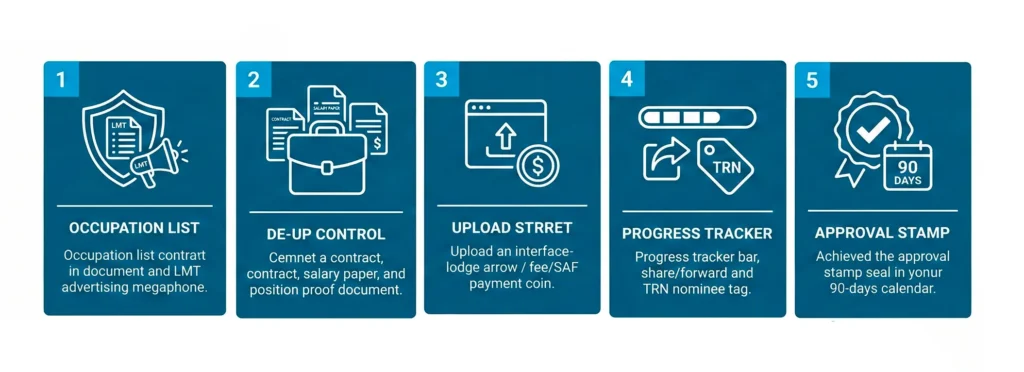
How to Nominate: Step-by-Step
Step 1: Pre-Nomination Checks
Before you lodge:
- Confirm the nominee meets all 482 visa eligibility requirements (experience, qualifications, English, skills assessment if needed)
- Verify the occupation is on the CSOL and identify any caveats that may apply to your specific position
- Determine the Annual Market Salary Rate (AMSR) using the method specified in the relevant legislative instrument. If no equivalent Australian worker exists, prepare a detailed statement explaining your determination
- Conduct Labour Market Testing or confirm an ITO exemption applies
- Prepare your written employment contract
Step 2: Gather Your Nomination Documents
You need to prove two things: your status and your relationship.
- Nominee's full legal name and date of birth
- Transaction Reference Number (TRN), Application ID, or Visa Grant Number for all visas the nominee currently holds or has applied for
- Postcode of the actual work location (not your head office if different)
- Names of all known family members who will accompany the nominee
- If the nominee already holds a Subclass 457 or 482 visa and you do not want to include their existing family member in the nomination, state your reasons in writing
- Signed and dated written contract of employment — from both parties (unless the occupation is exempt — see the list of exempt occupations on Home Affairs)
- Evidence you will pay the AMSR at or above the CSIT — industry salary surveys, market data, payroll records
- If the nominee's proposed salary is at the lower end of a salary range: provide a detailed statement explaining why
- If the role includes significant allowances or non-monetary benefits: explain how the AMSR was determined
- If there is no equivalent Australian worker in the market: provide a detailed statement on how you calculated the rate
- Advertising records showing platform, dates, and content of advertisements
- Record of applications received, candidates assessed, and reasons why each was not suitable
- Evidence LMT was conducted within the required period before lodgement (in accordance with the legislative instrument)
- If claiming an ITO exemption: documents showing the international trade obligation applies
- Duty statement for the nominated position (tasks must substantially align with ANZSCO descriptions but must not simply be copied from ANZSCO)
- Organisational chart showing how the position fits within the business — include full names of current employees and any visas held
- Brief description of your business and how the nominated position fits within it
- Evidence the position existed before lodgement (if existing position) OR expansion plans that created the new position (if new position)
- Information about who previously performed the tasks of the position
- Evidence the position went through a transparent recruitment process including number of candidates interviewed and why they were not suitable
- If possible: independently verifiable evidence such as copies of contracts or leases, purchase orders from third parties
- Evidence addressing the specific caveat — e.g., for chef: detailed position description, menu, floor plan, photographs of the premises, description of table service and in-restaurant dining volume, explanation of core business activities
- If a turnover or salary caveat applies: written submission explaining why the exclusion should not apply (e.g., overseas parent company turnover, or additional non-monetary benefits)
- Copy of passport/citizenship certificate if nominee is a citizen/national of: China, Japan, Thailand, Chile, South Korea, New Zealand, Singapore
- Copy of permanent resident status if nominee is a permanent resident of: Chile, South Korea, New Zealand, Singapore
- If nominee is an associated entity employee: employment reference on company letterhead, current payslips or contract, company registration documents showing the association
- If nominee manages all or large part of company operations: organisational chart, detailed job description
- If nominee is a WTO country citizen working for you in the nominated position for the last 2 years: passport copy and employment contract/letter of offer with start date
Step 3: Submit Your Nomination in ImmiAccount
- Log in or create an ImmiAccount
- Attach all nomination documents
- Pay the AUD 330.00 nomination application fee — ImmiAccount will calculate the Skilling Australians Fund (SAF) levy automatically
- The Department will not process your nomination until payment is received
- Note your Transaction Reference Number (TRN)
- Provide the TRN to your nominee so they can include it in their visa application
Step 4: After Nomination Lodgement
- If anything changes while your nomination is being assessed, attach updated information or a submission explaining the changes in ImmiAccount. You may also complete and upload Form 1022 Notification of Changes in Circumstances
- The Department may request additional information — respond promptly
- You can withdraw your nomination at any time before a decision is made. To withdraw formally, email the relevant processing area — removing the application from ImmiAccount does NOT constitute a withdrawal
- Note: the nomination fee is generally not refunded once approved
Step 5: Nomination Outcome
- If approved: you receive a letter containing your nomination approval number. Your nomination is valid for 12 months from the approval date
- If refused: you receive written reasons for refusal and your review rights if any
- Your nomination must remain approved and valid at the time the Department decides on the nominee’s visa application
- The nominee must begin employment within 90 days of entering Australia or of their visa grant date if already in Australia — failure to start within this period can result in visa cancellation
⭐ 4.6 Google Rating
Consistently rated 5-star by clients across Australia
⚡ Faster Processing
Complete applications reduce delays
🛡️ MARA Protection
Fully licensed MARA agents
Cost and Processing Time
- Item
- Amount
- Nomination fee
- AUD 330.00
- Skilling Australians Fund levy
- Calculated by ImmiAccount based on turnover and nomination period
- Nominee visa charge (paid by nominee)
- From AUD 3,210.00
482 visa processing time for nominations varies depending on completeness of application and current volumes. Accredited Sponsors receive priority processing. The Department’s processing time guide is an indication only — not specific to your application.
About This Visa Key Facts for Sponsors
Your nominated worker can stay for the period you nominate them for — up to a maximum of 4 years (5 years for Hong Kong passport holders). Your nomination lasts 12 months from the approval date, or ends earlier if:
- You receive written notification to withdraw
- The nominee’s visa application is finally determined or withdrawn
- The nominee is granted the SID visa
- Your standard business sponsor approval ceases or is cancelled
- The labour agreement ceases (if applicable)
Sponsorship of the visa holder and their family lasts as long as they hold a valid Subclass 482 visa and continue to work for you.
Your Obligations as a Sponsor
Your sponsor obligations do not end at visa grant. You are legally responsible for the following — even if you use a migration agent:
- Ensure the nominee begins employment within 90 days of entering Australia or their visa grant date
- Notify the Department if you terminate the visa holder’s employment or they cease working for you
- Notify the Department if you change the visa holder’s hours, duties, or pay
- Notify the Department when the visa holder’s visa is expiring
- Comply with all Australian workplace laws — your sponsored worker has the same rights as an Australian employee
- Meet all obligations under the SID visa program as a standard business sponsor
Failure to comply with sponsor obligations can result in infringement notices, civil penalties, and being barred from future sponsorship.
Why Choose The Migration for Employer Sponsorship?
We are compliance partners for your workforce — not just visa processors. We protect your business from costly nomination errors, LMT deficiencies, and ongoing obligation breaches.
MARA Registered Agents
Authorised to communicate directly with the Department of Home Affairs on your behalf
LMT Strategy and Documentation
We design and document your Labour Market Testing to meet the Department's exacting standards
AMSR Determination
We help you calculate, justify, and document the annual market salary rate correctly
CSOL Caveat Review
We identify and address any caveats that apply to your position before you submit
Nomination Preparation
Every document is reviewed for accuracy, completeness, and compliance
Accreditation Support
We assist with Accredited Sponsor applications for businesses with regular hiring needs
FAQs for Sponsors
How does Labour Market Testing work for the 482 visa?
LMT requires advertising the role on specified platforms for a required period and documenting all applications and outcomes. The evidence must comply with the relevant legislative instrument — non-compliant LMT is a common refusal ground. Exemptions apply where an ITO exists.
What happens if I pay less than the AMSR?
If you pay below the Annual Market Salary Rate, the Department will likely refuse the nomination. The visa program cannot be used to reduce operating costs — overseas workers must have comparable work agreements to Australian workers in equivalent roles.
Can I withdraw a nomination after submitting?
Yes, you can withdraw at any time before the Department decides on the nomination or the nominee’s visa. Email the processing area directly. Removing the application from ImmiAccount does not constitute a formal withdrawal. Fees are generally not refunded once approved.
What is the 482 visa cost for the sponsor?
The nomination fee is AUD 330.00, plus the Skilling Australians Fund levy calculated by ImmiAccount. The nominee separately pays the visa application charge of AUD 3,210.00 (main applicant). Your business pays the SAF levy — this is a legal obligation and cannot be passed on to the nominee.
What is the 482 visa processing time for nominations?
482 visa processing time for nominations depends on application completeness and current volumes. Accredited Sponsors receive priority processing. We do not provide processing time estimates, these are entirely within the Department’s discretion.
Your Skills Deserve Permanent Recognition
Ready to bring the right person on board? Let’s get your nomination right from the start.