
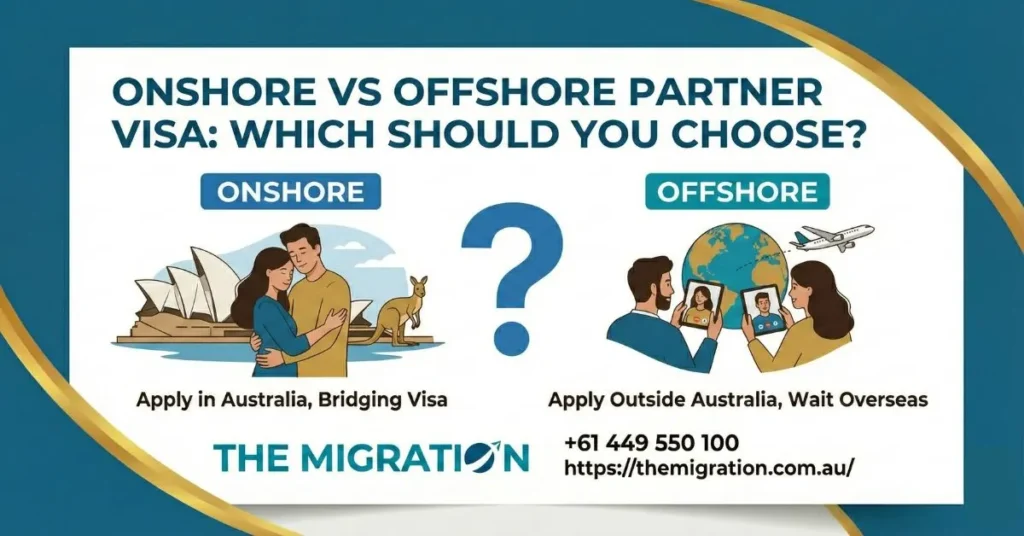
Picture this, you’ve found your soulmate in Australia, but now you’re facing one of the most stressful decisions of your immigration journey. Should you apply for an onshore vs offshore partner visa? This choice will determine whether you spend the next two years together or apart, working or waiting, and could cost you thousands in additional expenses if you get it wrong.
I’ve watched countless couples agonize over this decision, and honestly, it breaks my heart when I see them choose the wrong pathway simply because they didn’t understand the real differences. With processing times stretching beyond two years and costs exceeding $20,000, there’s no room for guesswork.
Let me share everything you need to know about both pathways, so you can make this life-changing decision with confidence.
Why This Decision Matters More Than You Think
Australia’s partner visa system isn’t just about paperwork it’s about your entire life for the next three to four years. The Australia partner visa requirements 2025 have become increasingly complex, with stricter English standards and enhanced background checks that affect both pathways differently.
Every month, I see couples who chose their pathway based on incomplete information. Some endure unnecessary separation because they didn’t realize they qualified for onshore processing. Others burn through their savings because they underestimated offshore relocation costs. Don’t let this be your story.
The truth is, both the onshore partner visa (subclass 820/801) and offshore partner visa (subclass 309/100) lead to the same destination permanent residency in Australia. But the journey? That’s where everything changes.
The Onshore Journey: Building Your Life While You Wait
When Sarah and James chose the onshore pathway, they had no idea how transformative it would be. “We went from being a long-distance couple to building our entire life together,” Sarah told me. “I started working within weeks, we bought our first car together, and I even enrolled in a nursing course.”
What Makes Onshore Special?
The partner visa subclass 820/801 isn’t just about staying in Australia it’s about becoming Australian before you even get your permanent visa. You must be physically present in Australia when applying and when your temporary visa is granted, but this requirement unlocks opportunities that offshore applicants can only dream of.
The Reality of Processing Times
Let’s be honest about partner visa processing time Australia. The current wait times for onshore applications are:
- Temporary visa (820): 21-29 months for most applicants
- Permanent assessment: Exactly 24 months after your initial application
- Total journey: Around 3.5 to 4 years from start to finish
Yes, it’s longer than offshore processing, but here’s what most people don’t realize—you’re living your life during this time, not putting it on hold.
The Bridging Visa Game-Changer
Once your current visa expires, you’ll automatically receive a Bridging Visa A, and this is where the magic happens:
Work opportunities open up immediately. You can work unlimited hours in any job, start a business, or pursue that career you’ve always wanted. I’ve seen people launch successful consulting firms, land dream jobs, and even start families all while their visa processes.
Healthcare becomes accessible. Medicare coverage means you’re not one medical emergency away from financial disaster. Bulk billing, specialist referrals, mental health support—it’s all available from day one.
Education doors swing open. Many institutions offer domestic student fees to bridging visa holders, potentially saving you tens of thousands of dollars on courses or degrees.
The Travel Reality Check
Here’s something that catches many people off guard: your Bridging Visa A doesn’t allow you to leave and return to Australia. If you need to travel internationally, you’ll need to apply for a Bridging Visa B ($185), which can be for single or multiple trips.
I always tell couples to plan for this. Family emergencies happen, business trips arise, and sometimes you just need a vacation. The key is understanding the process and planning ahead.
What Onshore Really Costs
The Australia spouse visa cost extends far beyond the $8,850 application fee. Here’s the real breakdown:
Government fees: $8,850 (plus $4,890 if you don’t meet English requirements) Health exams: $400-900 per person Police checks: $42-200 per country Document translations: $150-500 Living expenses: Your ongoing life in Australia
Realistic total: $12,000-22,000
The advantage? You’re earning Australian wages while paying these costs, not depleting savings from overseas.
The Offshore Journey: Playing the Long Game
When Maria chose the offshore pathway from the Philippines, she knew she was in for a marathon, not a sprint. “The hardest part wasn’t the processing time,” she reflects. “It was maintaining our relationship across 14 time zones while trying to prove to immigration officers that we were genuine.”
Why Offshore Can Work Better
The partner visa subclass 309/100 offers something onshore can’t: the option to apply for an intended marriage. If you’re engaged but not yet married, this pathway lets you apply now and marry before your visa is granted perfect for couples still planning their wedding.
The Speed Advantage
Offshore applications generally process faster:
- Temporary visa (309): 12-21 months for most applicants
- Total timeline: 3-3.5 years from application to permanent residency
That 6-12 month difference might not sound like much, but when you’re counting every day until reunification, it feels enormous.
The Separation Reality
Let me be brutally honest offshore processing means separation. Real separation. You can’t just pop over to Australia for a weekend visit without applying for a separate tourist visa, and even that’s not guaranteed while your partner visa is processing.
I’ve counseled couples through this, and the emotional toll is real. Different time zones mean missed calls. Special occasions happen without you. Your partner builds friendships and experiences you can only hear about secondhand.
But for many couples, this time becomes incredibly valuable. They use it to save money, complete career commitments, spend quality time with family, and plan their future Australian life meticulously.
The Financial Picture
Australia spouse visa cost for offshore applicants includes hidden expenses many people don’t consider:
Application fees: $8,850 (same as onshore) Travel for interviews: $200-2,000 depending on your location Initial flights to Australia: $800-4,000 per person First month accommodation: $2,000-6,000 Setting up your new life: $5,000-15,000
Realistic total: $15,000-35,000
The key difference? You’re spending this money all at once when you move, not gradually over the processing period.
Unique Offshore Advantages
There are opportunities only offshore applicants get:
Career completion: Finish that big project, get that promotion, or wrap up business commitments properly.
Financial preparation: Save every penny for your Australian adventure without the pressure of immediate relocation.
Family time: These might be your last extended months or years near family and friends from home.
Wedding planning: If you’re doing the intended marriage route, you have time to plan your perfect ceremony.
Making the Right Choice for Your Situation
After helping hundreds of couples through this decision, I’ve learned that the right choice isn’t about which pathway is “better” it’s about which one fits your life.
You Should Choose Onshore If:
Your relationship thrives on togetherness. Some couples just can’t handle separation. If you’re one of them, don’t torture yourselves trying to prove you’re strong enough for offshore processing.
You need to work immediately. Whether it’s financial necessity or career ambition, onshore gives you immediate access to the Australian job market.
Healthcare is a concern. Chronic conditions, pregnancy plans, or just peace of mind—Medicare access from day one can be invaluable.
You’re already in Australia legally. If you have a valid visa that allows bridging visa eligibility, onshore often makes the most sense.
You Should Choose Offshore If:
You can handle the wait strategically. If separation feels manageable and you see value in the preparation time, offshore processing’s speed advantage becomes very attractive.
You have commitments to complete. Job contracts, family obligations, or business matters that need proper closure.
Financial planning appeals to you. The ability to save money in your home country while planning a one-time move to Australia.
You can’t easily get to Australia. Visa restrictions, travel costs, or other barriers that make entering Australia challenging.
The Application Process: Setting Yourself Up for Success
Regardless of which pathway you choose, success depends on one thing: exceptional relationship evidence. Immigration officers see thousands of applications, and yours needs to tell a compelling story of genuine, ongoing commitment.
Building Your Evidence Portfolio
Think of your relationship evidence as chapters in your love story:
Chapter 1: How you met and fell in love Photos, messages, travel records from your early relationship
Chapter 2: Building a life together Joint finances, shared living arrangements, combined possessions
Chapter 3: Community recognition Friends and family who know you as a couple, social events, shared activities
Chapter 4: Future planning Wills naming each other, shared goals, long-term commitments
Common Mistakes That Kill Applications
Rushing the documentation process. Quality beats quantity every time. Better to submit 50 excellent pieces of evidence than 200 mediocre ones.
Inconsistent information. Your sponsor’s application and your application must tell the same story with the same details.
Poor quality translations. Don’t use Google Translate or your bilingual friend. Pay for NAATI-certified translations.
Missing deadlines. When the Department asks for additional information, you typically have 28 days. Use every single one of them to provide comprehensive responses.
What’s Changed in 2025
The immigration landscape keeps evolving, and 2025 has brought significant changes:
English requirements have tightened. The functional English standard is now harder to meet, making the $4,890 English fee more common.
Background checks have intensified. Expect longer processing times if you’ve lived in multiple countries or have complex circumstances.
Digital processing has improved. The new online platform makes tracking easier, but technical glitches still happen.
Processing priorities have shifted. Both pathways now face similar scrutiny, but offshore applications still maintain a slight speed advantage.
Your Decision Framework
Here’s how I help couples make this choice:
Ask yourself these three critical questions:
- Can our relationship handle 18+ months of separation? Be honest. Long-distance is harder than most people think.
- Do I need immediate work rights and healthcare access? If yes, onshore is probably your answer.
- What’s my current visa situation? If you can’t legally enter or stay in Australia, offshore might be your only option.
Your answers will usually point you in the right direction.
Making Your Final Call
The onshore vs offshore partner visa decision isn’t just about immigration, it’s about how you want to spend the next three to four years of your life. There’s no universally correct choice, only the right choice for your relationship, circumstances, and goals.
If you choose onshore, embrace the journey. Yes, it takes longer, but you’re building your Australian life every single day. If you choose offshore, use the separation time strategically. Save money, complete commitments, and plan the most organized relocation possible.
Either way, remember this: thousands of couples successfully navigate both pathways every year. With proper preparation, realistic expectations, and solid relationship evidence, you’ll join them in building your Australian future together. The hardest part isn’t the visa process it’s deciding to start. Once you do, every day brings you closer to your shared life in Australia.
Ready to begin your Australian journey together? Book a partner visa consultation today and get personalised advice based on your relationship and visa history.
